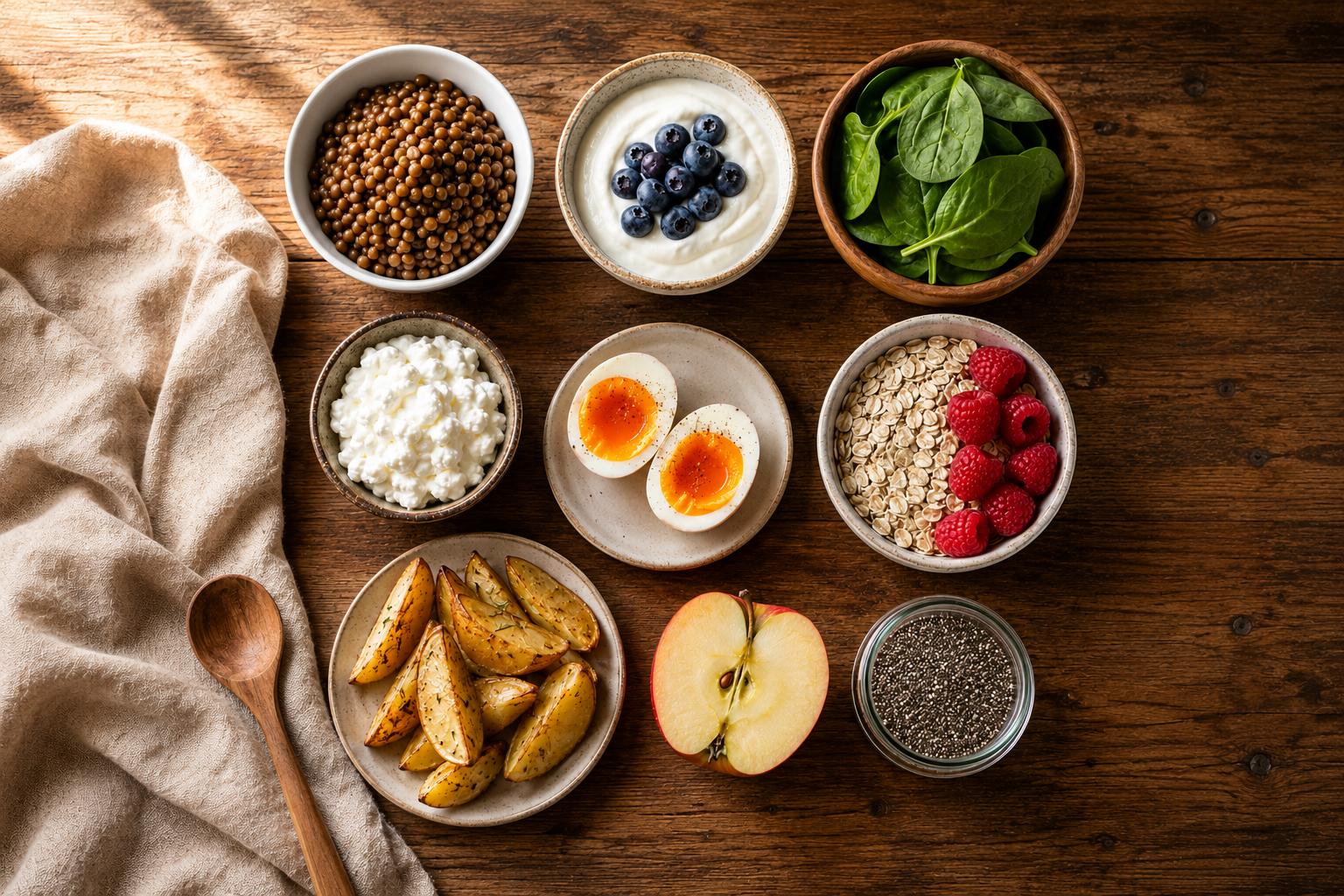
Before you start: the satiety equation
Hunger feels personal, but a lot of it is mechanical. Three things help your brain decide you've had enough: how full your stomach is, how steady your blood sugar stays, and the fullness signals your gut sends as it digests protein, fat and fiber. Ultra-processed snacks, sugary drinks and refined carbs pack a lot of calories into a small, fast-digesting package, so they do little for any of the three. The foods in this guide do more.
"The secret isn't eating less. It's eating foods that tell your brain you're full. High protein, high fiber, and high water content are the three things that make that happen, and each of these 9 foods is strong on at least one of them."
Why some foods fill you up more than others
The most filling foods work on more than one of these at once:
Baseline check
- Breakfast: Does it have a protein source? If not, start there.
- Lunch: Any fiber in there? Leafy greens, lentils or oats are easy wins.
- Snacks: Are they processed, or whole foods with real volume?
- Cravings: When do they hit hardest? That meal is the one to fix first.
The goal
You don't need to eat all 9 foods every day. Pick 2 or 3 you already like and build your meals around them for one week. The goal is to crowd out the low-satiety stuff gradually, not overhaul your whole diet overnight.
A simple rule: every meal gets at least one protein source and one fiber source. That single shift often makes a noticeable difference in how full you feel through the day.
Protein-first foods
Protein is generally the most satisfying of the three. Your body uses more energy digesting it than it does carbs or fat, and it tends to keep hunger at bay for longer. If you're hungry again soon after eating, a meal light on protein is one of the most common reasons.
Lentils
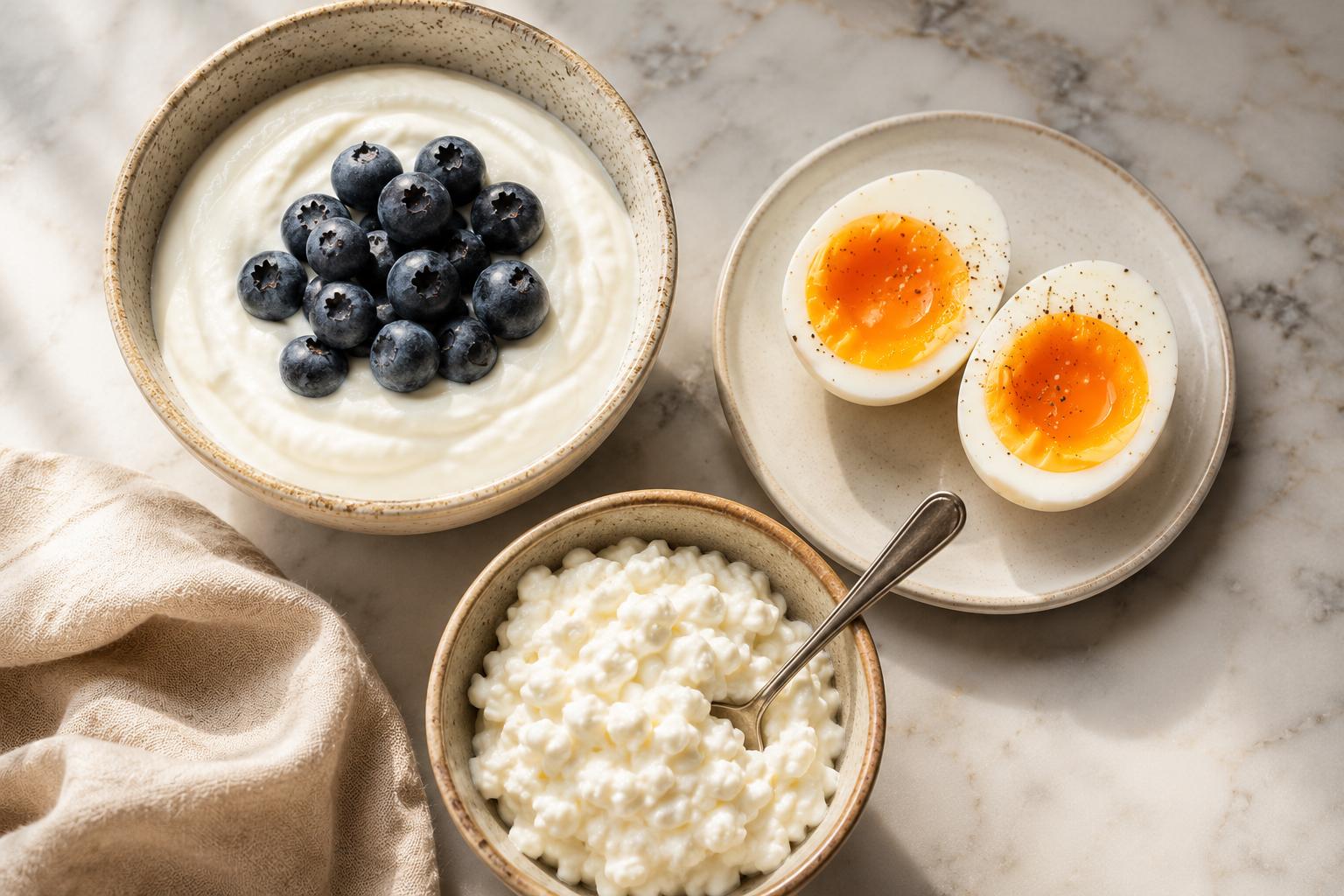
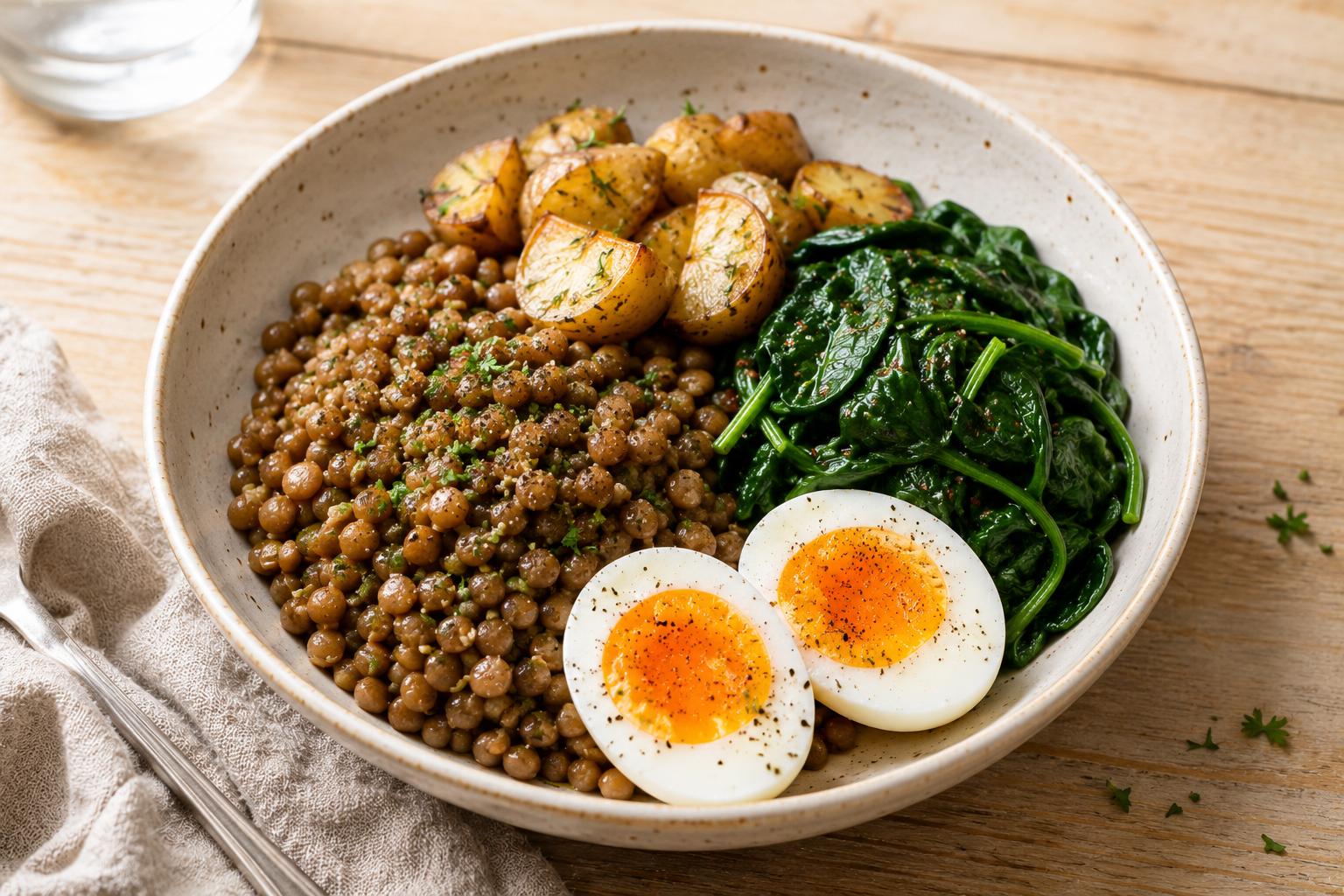
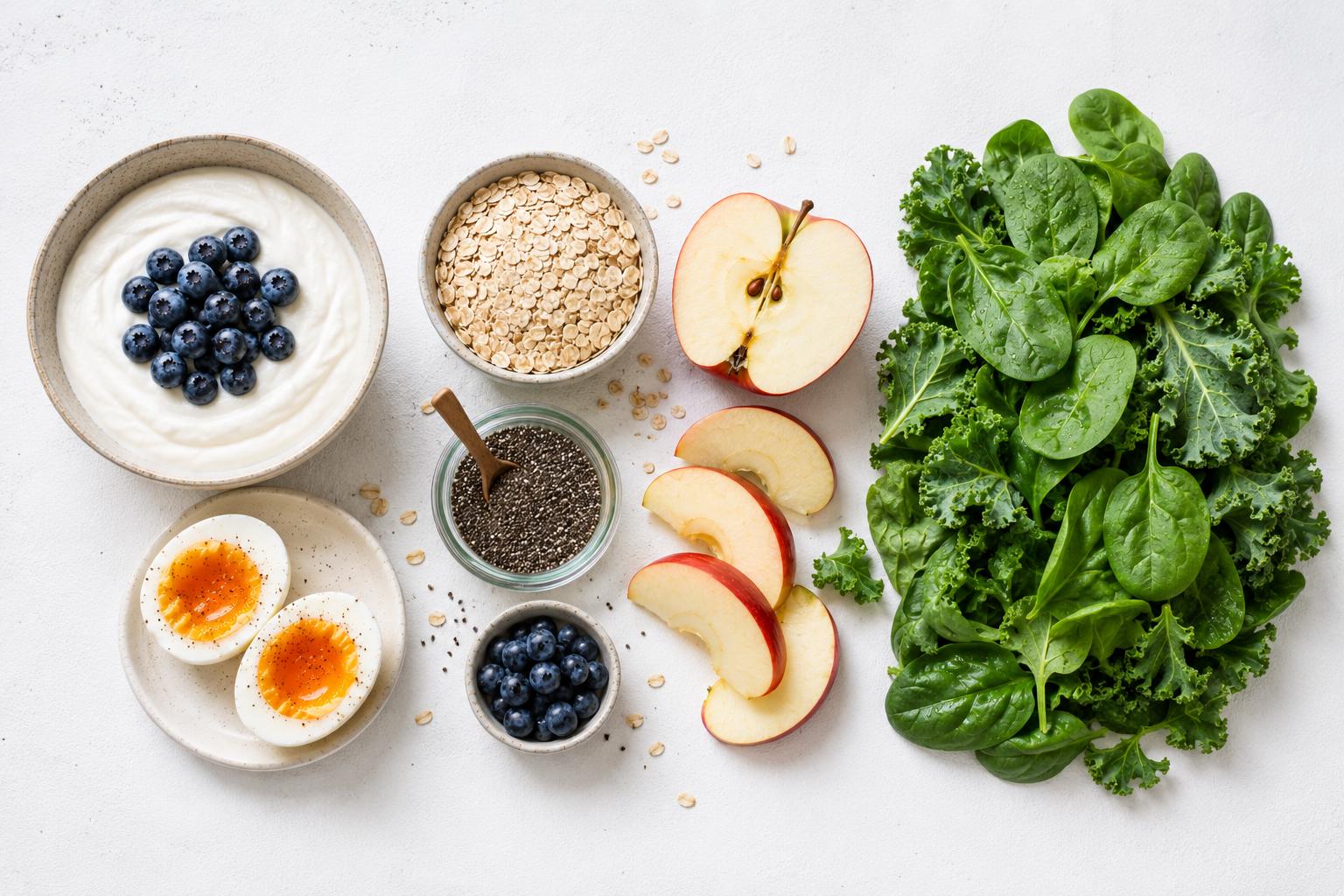
One cup of cooked lentils gives you about 18 grams of protein and 16 grams of fiber. That combination slows digestion and helps keep blood sugar steadier. Unlike most meat-based proteins, lentils also bring resistant starch, which feeds your gut bacteria. Red lentils are the easiest to work with: they cook in about 15 minutes and don't need soaking.
Greek Yogurt
Straining removes much of the liquid whey, so Greek yogurt has roughly twice the protein of regular yogurt: around 20 grams in a cup of plain, depending on the brand. Many brands also contain live cultures. Full-fat versions can feel more filling if you're eating yogurt as a meal rather than a snack. One thing to watch: flavored versions often carry as much sugar as a dessert, so buy plain and add your own fruit.
Cottage Cheese
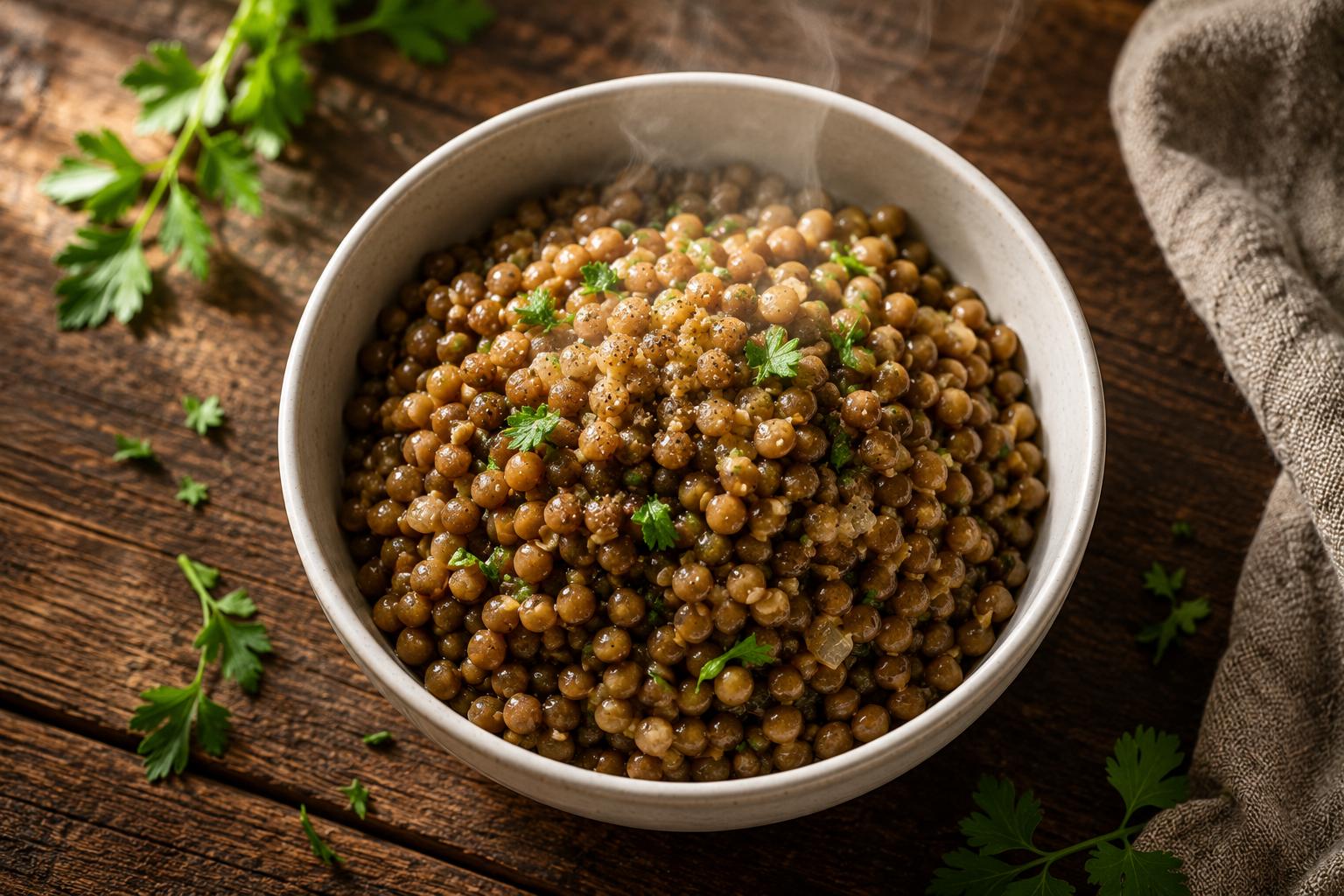
Cottage cheese is rich in casein, a protein that digests slowly, which makes it a good evening snack when you want something filling without a lot of calories before bed. Half a cup of low-fat cottage cheese has roughly 12 to 14 grams of protein for about 80 to 100 calories. It's had a big wellness comeback recently, and honestly the nutrition case for it has always been strong.
Eggs
In one well-known study, women who ate an egg breakfast felt fuller and ate less at lunch, and for the rest of the day, than when they ate a bagel breakfast with the same calories. Results vary between studies, but eggs are an easy way to put protein and fat on the breakfast plate, and that combination is satisfying for most people.
Fiber and volume foods
Fiber does two things that matter for fullness. It slows digestion so you stay satisfied longer, and it adds bulk so your stomach feels full sooner. Water-rich foods do the second job too: you can eat a much larger portion by weight for far fewer calories. The four foods below use one or both.
Leafy Greens
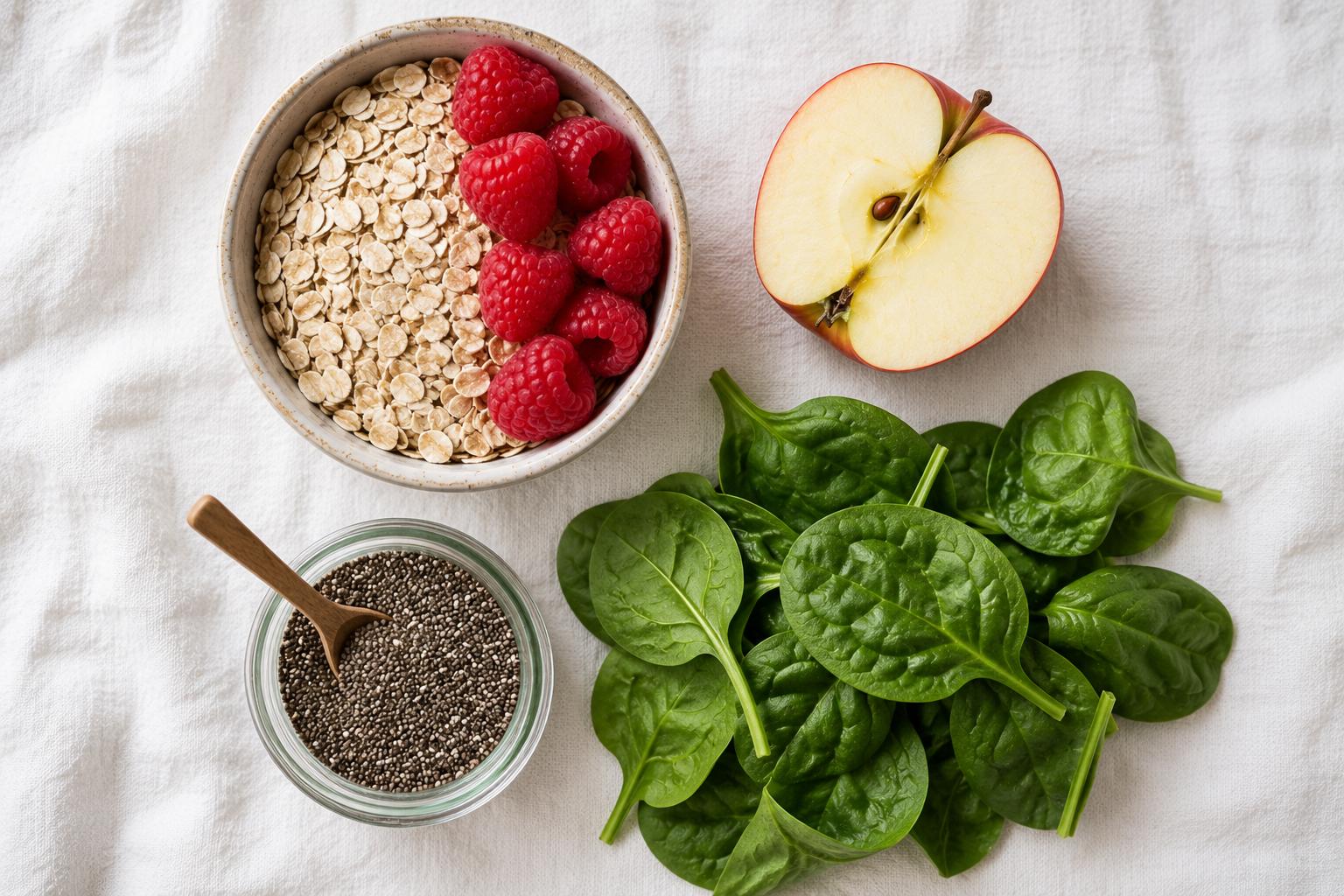
Spinach, kale, arugula and romaine give you a lot of food for very few calories: a large bowl runs under 50. In one lab study, eating a large, low-calorie salad before lunch cut the calories eaten at that meal by about 12 percent. The dressing matters, though. In the same study, salads made richer with extra dressing and cheese increased how much people ate overall.
Oats
Oats contain a soluble fiber called beta-glucan that forms a thick gel in your digestive system and slows digestion. Porridge was one of the most filling foods in the original 1995 Satiety Index study, scoring 209 against 100 for white bread, and for many people a bowl carries them comfortably through the morning.
Apples
Apples bring several fullness factors together: pectin, a soluble fiber that gels in your gut; a high water content of about 86 percent; and plenty of chewing. In one study, adults who ate a whole apple before lunch took in about 15 percent fewer calories at that meal, apple included, than when they skipped it.
Chia Seeds
Chia seeds absorb roughly 10 to 12 times their weight in liquid and swell into a thick gel. Two tablespoons can soak up close to a cup of liquid, and with about 10 grams of fiber per ounce they're among the most fiber-dense foods you can buy. Stirred into yogurt, oats or a smoothie, they make the whole thing more substantial.
The surprise: potatoes topped the Satiety Index
Potatoes get blamed for a lot of diet problems that really come down to how they're prepared. A plain boiled potato is remarkably filling for its calories: in the original Satiety Index study it scored higher than any of the other 37 foods tested. The issue isn't the potato. It's the deep fryer and the half stick of butter.
Potatoes
Boiled potatoes scored 323 in the 1995 Satiety Index study, where white bread was the baseline at 100. They're also a good source of potassium, vitamin B6 and vitamin C. Cooling cooked potatoes increases their resistant starch, which feeds your gut bacteria and may soften the rise in blood sugar.
Satiety Index comparison
- Potatoes (boiled): 323, highest of the 38 foods tested
- Oatmeal: 209
- Beef: 176
- Eggs: 150
- White bread (baseline): 100
Source: Holt et al., 1995 Satiety Index study. Foods were compared in equal-calorie portions; higher means more filling.
Best simple preparation
- Boiled: the version that topped the index, and the simplest.
- Baked: great texture, minimal added calories.
- Roasted: use a little oil and season well.
- Cooled potato salad: the most resistant starch.
Avoid deep frying, heavy cream and loading them with butter. That's what turns a filling whole food into a calorie problem.
How to combine these foods for maximum satiety
Each of these foods works on its own, but the real difference shows up when you combine protein, fiber and volume in the same meal. Here are four simple combinations that cover all three.
Power Oat Bowl
Lentil & Greens Bowl
Apple + Cottage Cheese
Egg & Potato Skillet
Keep it simple at first. One protein source and one high-fiber or high-volume food at every meal covers most of the ground. You can get more specific once the habit feels normal.
Quick reference: all 9 foods at a glance
Use this as your grocery list reference. Save or screenshot it for your next shop.
| Food | Calories | Protein | Fiber | Primary benefit | Type |
|---|---|---|---|---|---|
| Lentils | 230 / cup | 18g | 16g | Long-lasting energy stability | Protein Fiber |
| Greek Yogurt | 130 / cup | ~20g | 0g | High protein, easy to build on | Protein |
| Cottage Cheese | 80–100 / ½ cup | 12–14g | 0g | Slow-digesting casein protein | Protein |
| Eggs | 70 / egg | 6g | 0g | Complete protein + fat combo | Protein |
| Leafy Greens | 7–20 / cup | 1–3g | 1–2g | Maximum volume, minimum calories | Volume |
| Oats | 150 / ½ cup | 5g | 4g | Beta-glucan gel formation | Fiber |
| Apples | 95 / medium | 0.5g | 4g | Pectin + water + chewing effect | Fiber Volume |
| Chia Seeds | 138 / oz | 4g | 10g | Absorbs ~10–12x its weight in liquid | Fiber Protein |
| Potatoes | 130 / medium | 3g | 2g | Top score in the 1995 Satiety Index study | Volume Fiber |
Grocery list
Save thisProtein-first
- Lentils (dry or canned)
- Greek yogurt, plain
- Cottage cheese
- Eggs
Fiber & volume
- Oats
- Leafy greens
- Apples
- Chia seeds
- Potatoes
Your 7-day starter plan: build one habit, not nine
Don't try to add all 9 foods at once. Pick one protein source and one fiber source you already like and make sure they show up at every meal. This week layers them in one meal at a time.
Days 1–2
Protein at breakfast
Add one protein source to breakfast, either eggs or Greek yogurt. Notice how hungry you feel by mid-morning.
Days 3–4
Fiber at lunch
Add a fiber source to lunch, such as a leafy-greens base or some lentils, and pair it with a protein.
Days 5–6
A smarter snack
Swap your afternoon snack for apple and cottage cheese. Notice whether you're less hungry at dinner.
Day 7
Prep ahead
Make overnight oats with Greek yogurt and chia seeds the night before, and wake up to a breakfast that's already done.
Many people notice they're less hungry between meals within the first week or two, though it varies from person to person. If you're not seeing a difference, look at breakfast first: adding protein there is one of the easiest changes to make and to keep.
Nutrition note: This is general wellness guidance, not medical advice. Individual responses to foods vary. If you have specific dietary needs, allergies, or health conditions, consult a qualified healthcare professional before making significant changes to your diet.
FAQ
How can I eat more and still lose weight?
The idea is energy density: choosing foods that give you a lot of food for relatively few calories. Water-rich foods like leafy greens, vegetables, fruit and potatoes let you eat generous portions, and pairing them with a protein source such as eggs, Greek yogurt or cottage cheese helps you stay satisfied. Swapping some calorie-dense processed foods for these makes it easier to eat less overall without feeling deprived.
Can I eat these foods every day?
For most people, yes, as part of a varied diet. Rotating your protein sources (lentils, eggs, Greek yogurt, cottage cheese) is better than relying on one. If you have an allergy, a lactose or other food intolerance, kidney disease, or a diet your doctor has prescribed, follow the advice you've been given.
Do chia seeds actually make you feel full?
They can help, but the research is mixed. Chia seeds absorb liquid and turn into a thick gel, and they are very high in fiber, so they make yogurt, oats or a smoothie more substantial. Some studies found people felt fuller after eating them and others found little difference, so treat them as a useful add-in rather than an appetite switch. Let them sit in liquid for 10 to 15 minutes first.
Keep Going
-
-