

Before you start: the 2-minute baseline
Sleep problems feel personal, but the fix is usually mechanical. Your brain uses cues (light, timing, temperature, and routine) to decide whether it’s “day mode” or “night mode.” When those cues are messy, sleep gets messy.
- Wake time: What time do you actually get up most days?
- Caffeine: What time is your last coffee/tea/energy drink?
- Screens: Are you scrolling in bed or within 30 minutes of sleep?
- Bedroom: Is it dark, quiet, and comfortably cool?
- Mind: Are you bringing tomorrow’s to-do list into bed?
We’re going to tighten up the signals that matter most. You don’t need to do all 7 changes perfectly. Pick 3 and commit for one week. Consistency beats intensity.
Most healthy adults do best around 7+ hours of sleep on a regular basis. If you’re aiming for a reset, start by protecting your wake time and building backward from there.
1. Lock your wake time + get morning light
Fastest impactThe most powerful “reset” lever isn’t bedtime—it’s your wake time. Waking up at a consistent time trains your body clock. Morning light then reinforces that clock, making you naturally sleepy earlier at night. Public health guidance commonly recommends a consistent sleep schedule and reducing evening light and devices.

Do this tonight
Choose a wake time you can keep 6–7 days/week (even on weekends). Set your alarm. Tomorrow morning, get outside light for a few minutes, or sit by a bright window.
- If mornings are dark: turn on bright indoor lights right away.
- If you hit snooze: put the phone across the room and plan a tiny “first step” (water, bathroom, open blinds).
Your circadian rhythm responds strongly to light in the morning and evening. Bright morning light helps shift your body toward an earlier rhythm, while bright evening light can push sleepiness later.
Translation: if you want earlier, easier sleep, anchor your morning first.
2. Move caffeine earlier (more than you think)
Caffeine doesn’t just affect falling asleep—it can reduce sleep depth and increase awakenings even if you “feel fine.” A practical rule: aim to stop caffeine about 8 hours before bed. If that feels impossible, at least try 6 hours as a baseline.

Simple cutoff math
If you want lights-out at 10:30 p.m., try making your last caffeinated drink before 2:30 p.m. If you’re at 11:30 p.m., try before 3:30 p.m.
Not ready for a hard cutoff? Step it back gradually:
- Days 1–2: no caffeine after 4 p.m.
- Days 3–4: no caffeine after 3 p.m.
- Days 5–7: no caffeine after 2 p.m. (or your 8-hour target)
- Green/black tea, iced tea, matcha
- Energy drinks and “pre-workout”
- Dark chocolate (small, but real)
- Some pain relievers (check labels)
Keep it simple: pick one predictable caffeine window (for example, morning only) for one week.
3. Build a wind-down routine that actually fits real life
Your brain needs an “off-ramp.” If you go from bright lights, work tabs, and dopamine scrolling straight into bed, you’ve basically asked your nervous system to brake from 60 to 0.

The 30-minute wind-down (copy/paste)
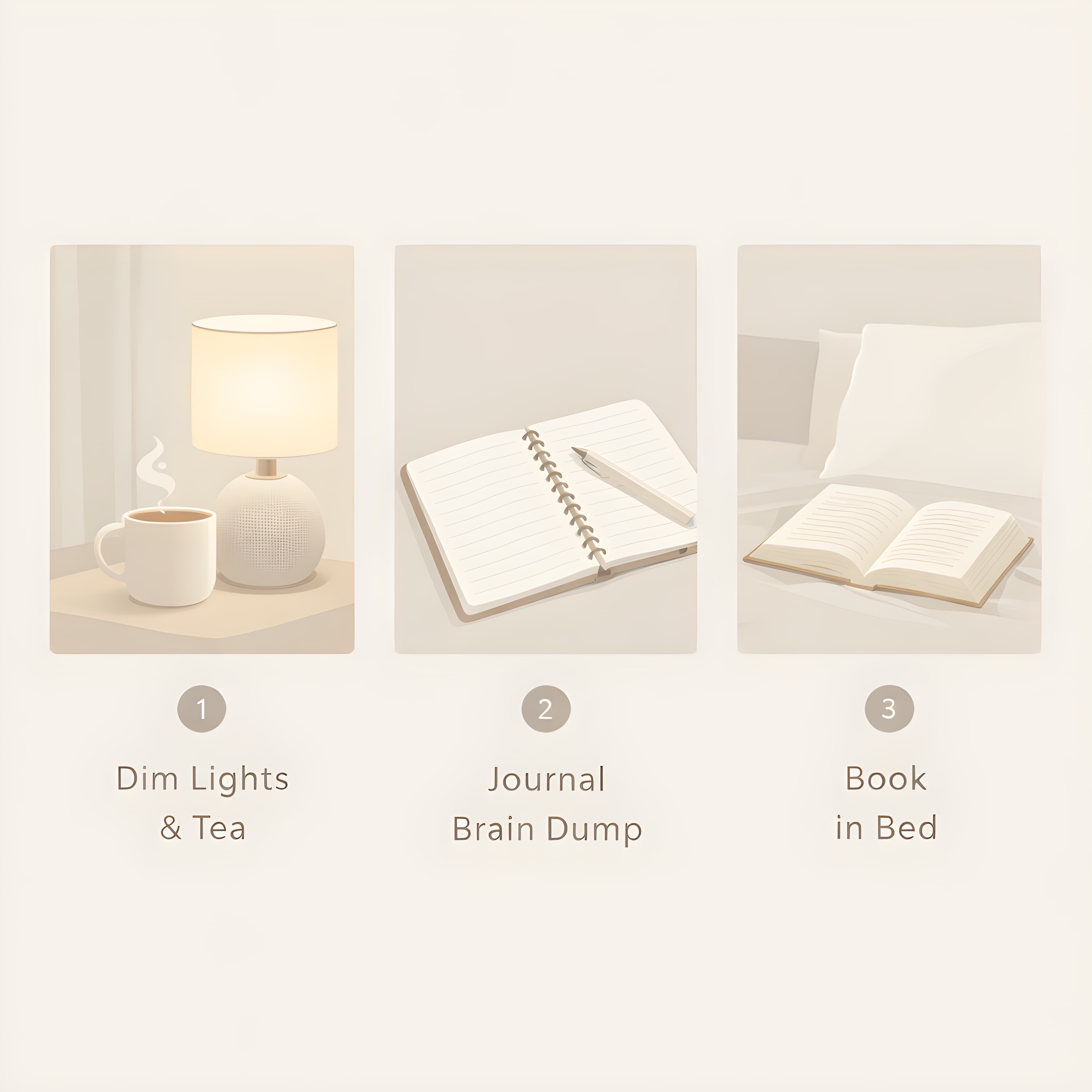
- Dim the lights (overhead lights off).
- Phone away or on "Do Not Disturb".
- One calming activity: light stretching, a shower, easy reading, or a relaxing playlist.
- Same last step every night: brush teeth, set alarm, and get into bed.
Health agencies commonly recommend turning off devices before bedtime and keeping the bedroom relaxing. If you can’t do 30 minutes, do 10. The signal matters.
- Set a wind-down alarm (a gentle reminder, not a punishment).
- Charge your phone outside the bedroom if possible.
- Swap active content for passive: quiet music, audiobook, or an easy physical book.
The goal is not “perfect routine.” It’s a consistent transition.

4. Turn your bedroom into a “sleep cave”
Your bedroom should make sleep the default. Public health guidance commonly recommends keeping the room quiet, relaxing, and cool, and minimizing light that tells your brain it’s daytime.
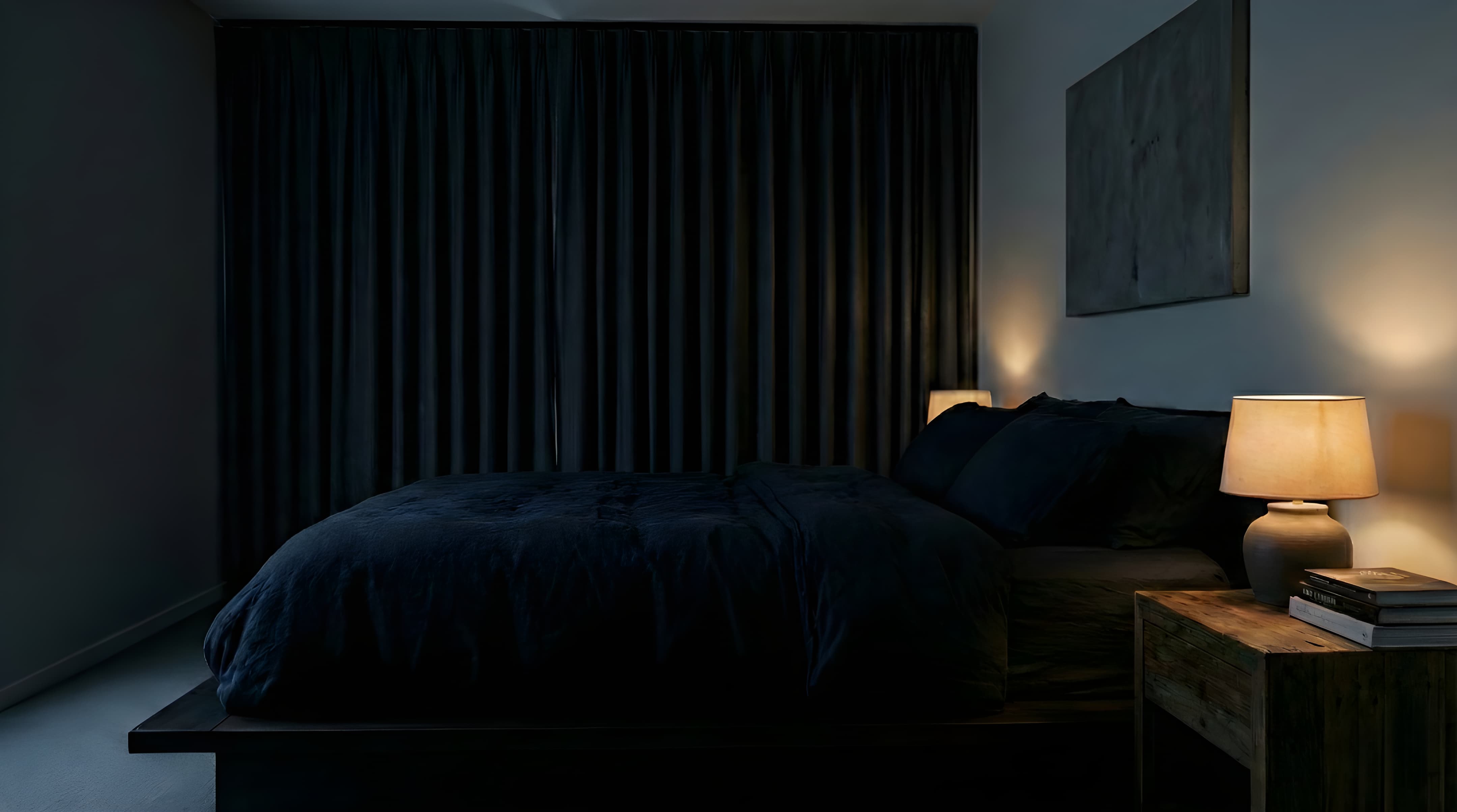
The 3-part checklist
- Dark: blackout curtains or an eye mask. Use dim, warm light if you need a nightlight.
- Cool: if you wake up hot, reduce layers, try breathable bedding, or lower the thermostat slightly.
- Quiet: white noise, earplugs, or simple room tweaks that reduce sudden sounds.
Bonus rule: keep the bed for sleep (and intimacy). If you’re awake longer than about 20 minutes, get up and do something calm in dim light. Then return to bed when you feel sleepy.
- Clear a path to the bathroom so you’re not turning on bright lights at night.
- Put a glass of water on the nightstand (less "get up" friction).
- Declutter one surface (visual calm helps mental calm).
- Keep the room for sleeping, not work or intense scrolling.
5. Time food, alcohol, and exercise for calmer nights
Sleep hygiene isn’t only what you do at bedtime. It’s also what you do in the last few hours before bedtime. Many sleep tips emphasize avoiding large meals and alcohol close to bedtime and exercising regularly—just not in a way that leaves you wired.

Aim to finish your main meal about 2–3 hours before bed. If you’re hungry later, keep it light.
If you drink, keep it earlier and moderate. Alcohol can make you sleepy at first but disrupt sleep later.
Move most days. If intense evening workouts keep you wired, shift them earlier and keep late workouts gentle.
Don’t overthink it. You’re looking for a calmer nervous system and fewer “body alarms” (heartburn, temperature spikes, adrenaline). One simple tweak can be enough.
6. Add a short evening movement cue (10–20 minutes)
If you sit all day, your body can feel restless at night. A short walk or gentle movement in the early evening helps discharge stress and makes it easier to feel physically ready for sleep.

The simplest version
- After dinner, do a 10–20 minute walk.
- If it’s cold or late, do gentle stretching or a slow mobility routine indoors.
- Keep it light enough that you can breathe through your nose.
If you love intense training at night and you sleep fine, keep it. If you’re struggling, test moving intense sessions earlier for a week.
Pair movement with your wind-down: walk, shower, then dim lights. You’re creating a predictable “downshift” chain.
7. Empty your brain before bed (so you’re not thinking in the dark)
A common sleep blocker is mental overdrive: replaying conversations, planning tomorrow, or doom-scrolling because your brain feels busy. The fix is simple: give your thoughts a container before you’re in bed.

The 5-minute brain dump
- Write everything that’s looping in your head.
- Circle the top 3 things you can act on tomorrow.
- Write the first tiny step for each (something you can do in 5–10 minutes).
- Close the notebook. You’re done for today.
This works because it tells your brain “we won’t forget.” Then you can let go.
Keep lights very dim. Avoid checking the time. If your mind is racing, do a quick note in the notebook and return to a calm activity (slow breathing, light reading) until you feel sleepy again.
7-day Sleep Reset plan (simple and repeatable)
Here’s the plan: choose your wake time, then layer changes gradually so it feels doable. Use this as a template for future guides too.
Anchor the morning
- Pick a consistent wake time.
- Get morning light (outside or bright window).
- Dim lights earlier in the evening.
Fix caffeine + wind-down
- Move your last caffeine earlier.
- Do a 10–30 minute wind-down before bed.
- Keep devices out of bed if possible.
Upgrade the bedroom
- Darken the room (curtains or eye mask).
- Cool the room and reduce noise.
- Keep a simple late-night plan (dim light + calm activity).
Make it automatic
- Add a 10–20 minute evening walk or gentle movement.
- Do a 5-minute brain dump before bed.
- Pick your 3 “keeper” habits for the next month.
Printable checklist (copy/paste)
Save thisDaily
- Wake up at the same time
- Get morning light
- Move caffeine earlier
- Finish dinner earlier (when possible)
Night
- Dim lights and lower stimulation
- 30-minute wind-down (or 10-minute version)
- Bedroom: dark, cool, quiet
- Brain dump (5 minutes)
Health info note: This is general wellness guidance, not medical advice. If you have persistent insomnia, loud snoring, breathing pauses, severe daytime sleepiness, or your sleep issues last more than a few weeks, consider talking to a healthcare professional.
FAQ
How long does a sleep reset take?
Many people notice a difference within 3–7 nights when they lock in wake time, reduce evening light, and move caffeine earlier. If your schedule is inconsistent, the reset takes longer—consistency is the multiplier.
What’s the #1 habit if I only pick one?
Pick a consistent wake time and get morning light. It stabilizes your body clock and makes everything else easier.
Is it normal to feel worse for a couple days?
Yes. If you shift wake time earlier or reduce caffeine, you might feel a temporary dip. That usually improves as your rhythm settles. Keep the wake time steady for the week.
What if I can’t stop using my phone at night?
Start with a smaller win: phone off the bed, brightness low, and a hard stop at least 30 minutes before sleep. Replace the last 10 minutes with a predictable calm step (wash face, stretch, read one page).
What if I wake up at 3 a.m. every night?
Keep lights very dim, don’t stare at the clock, and avoid stimulating content. If you’re wide awake, get out of bed and do a calm activity in dim light, then return when sleepy. Also check dinner timing, alcohol, and room temperature.
Should I avoid naps during a sleep reset?
During a sleep reset, treat naps like a small lever, not a daily fix. If you truly need one, keep it short (about 10–20 minutes) and take it earlier in the day so you don’t steal sleepiness from bedtime. Avoid long naps or late-day naps, especially after mid-afternoon, because they can push your bedtime later and make it harder to fall asleep. If your goal is to reset quickly, skipping naps for a few days often helps your body build stronger sleep pressure at night.
Can I sleep in on weekends and still fix my schedule?
Try to keep your wake time consistent, even on weekends. Sleeping in much later can shift your body clock and make Sunday night feel like jet lag, which slows your reset. If you need extra rest, aim for a small buffer (30–60 minutes later than usual) instead of a big jump. A better catch-up move is going to bed a little earlier, or taking a short early nap (if you tolerate naps well) rather than sleeping half the day.
Do I need melatonin or sleep meds for this plan?
Most people don’t need supplements or medication to benefit from better sleep hygiene. This guide focuses on the highest-impact basics: wake time, morning light, caffeine timing, a wind-down routine, and a sleep-friendly bedroom. Melatonin can be useful for specific situations (like jet lag or a very delayed schedule), but it’s not a knockout pill and works best alongside the habit changes above. If you’re considering melatonin or sleep medications, or if sleep problems persist for weeks, it’s smart to check with a qualified healthcare professional.
Next step: keep your routine simple
If you want this to stick, don’t keep adding habits. Pick your top 3 and repeat them for 30 days. Your sleep system likes predictability.
What to expect
Most people notice easier sleep onset within the first week, with deeper and more stable sleep by weeks two and three. If progress feels uneven at first, that’s normal — your sleep system is recalibrating.
If you’re tracking anything, keep it simple: a 1–10 “sleep quality” rating in the morning and one note on what you changed the night before.
Mini maintenance plan (30 days)
- Anchor your wake time: keep it within about 60 minutes daily, even on weekends.
- Protect your first hour: morning light + a little movement beats “perfect” routines.
- Keep caffeine honest: if sleep slips, move your cutoff earlier for 7 nights before changing anything else.
- Wind down consistently: repeat the same short pre-sleep sequence (lights low, screens off, calm activity).
- Adjust one lever at a time: change a single habit for a full week so you can actually see what worked.
Tip: Save this guide and revisit it after 7 nights to adjust what’s working.