What exercise snacking means
Exercise snacking means spreading short periods of intentional movement throughout the day instead of waiting for one long workout. The name is deliberately unserious, but the idea behind it is practical: if the free hour never arrives, stop building your week around the free hour.
The important word is intentional. An exercise snack has a defined activity and a defined length. Ten minutes of brisk walking that you decided to do is an exercise snack. Walking to the kitchen four times before lunch is daily activity. Both are useful, but only one of them is something you can plan, repeat and count.
An exercise snack is
- A short session with a start and an end
- Chosen on purpose rather than accidental
- Repeatable in the space you already have
- Something you can name afterwards
It is not
- A special category of exercise
- A shortcut that removes the need for effort
- A replacement for every kind of training
- Incidental steps counted after the fact
Current physical activity guidance says activity can be accumulated across the day, so shorter sessions add to your weekly total rather than being wasted. The general target most adults work toward is 150 minutes of moderate intensity activity per week, plus muscle strengthening activity on two days, and short sessions can contribute to both. They also interrupt long stretches of sitting in a way an evening workout cannot.
They can
- Make movement far easier to schedule
- Break up extended periods of sitting
- Help you accumulate activity across the week
- Give beginners a realistic starting point
- Support consistency, which is the part most routines lose first
They cannot automatically
- Replace every longer or heavier workout
- Guarantee any specific fitness result
- Make intensity and exercise type irrelevant
- Replace medical or professional advice
What you get from any of this depends on the type of movement, how hard you work, your current health and how consistently you repeat it. Formal research on very short bouts sometimes uses sessions of only a minute or two; this guide uses 10 minute versions because they are easier to remember, schedule and build a routine around when you are starting out.
Session 1: Morning cardio bite
This is the easiest session to start with and the easiest to keep. It needs no equipment, no change of clothes beyond shoes, and no decision making once it becomes routine.
The session
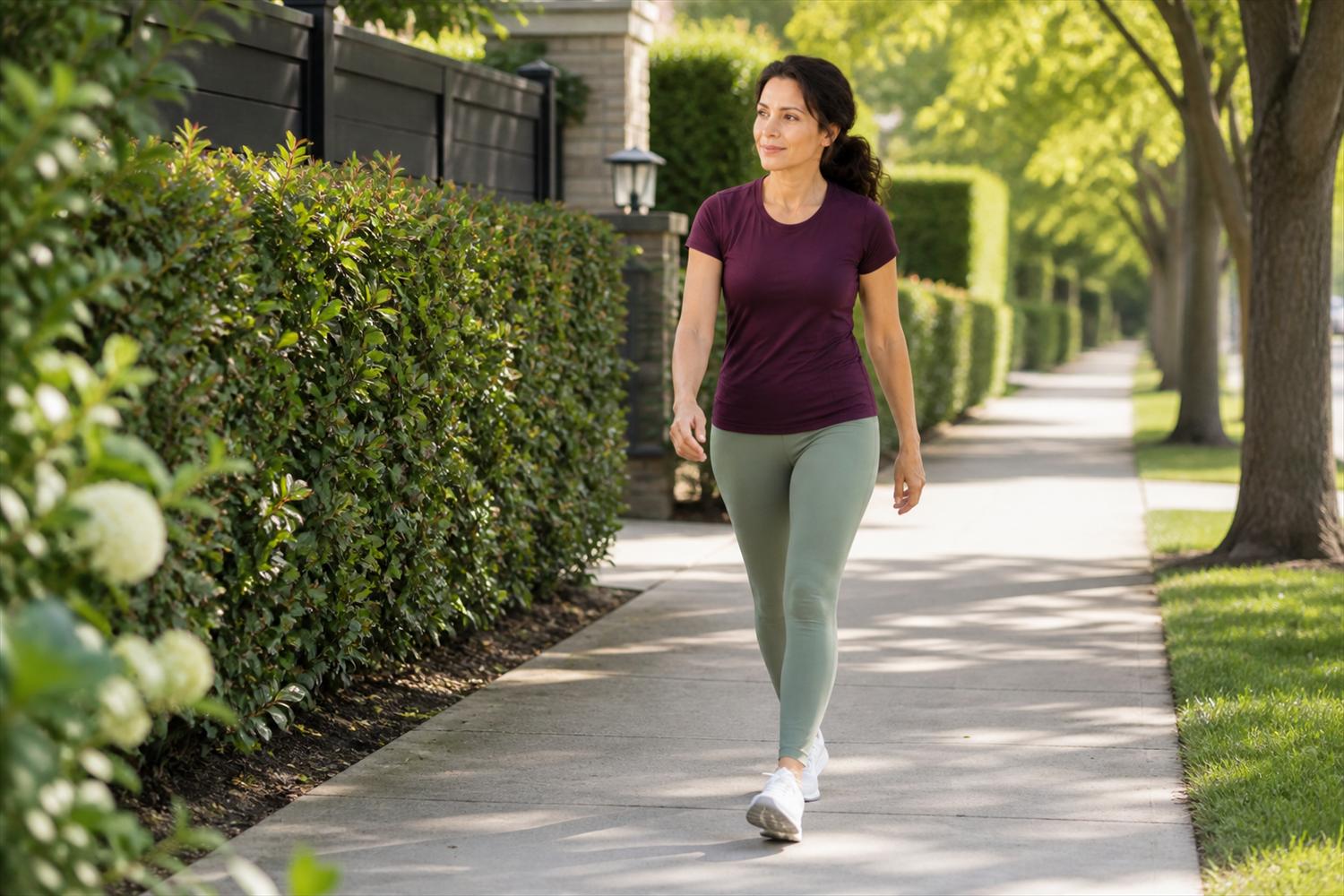
- Walk easily for 1 minute to warm up.
- Move to a purposeful brisk pace for 7 minutes.
- Slow down for the final 2 minutes.
No route planning and no warm up routine beyond that first minute. If you are new to this, treat the brisk section as the only part that needs attention.
The talk test
Moderate effort generally means you are breathing faster than usual but can still speak in short sentences. If you can hold a full conversation comfortably, pick the pace up slightly. If you cannot get a sentence out, ease off.
Indoor version: walk a loop through your home, use a hallway, or walk in place. The pace matters more than the scenery.
Mornings are the easiest place to protect 10 minutes, because nothing has had a chance to go wrong yet. If you want the fuller version of a calmer start, the Morning Routine Reset covers where movement fits alongside light, water and breakfast.
Session 2: Desk break strength
This is the session that covers your muscle strengthening days. It needs a sturdy chair, a clear stretch of wall and enough floor space to step backwards. It is deliberately unglamorous, because the point is that you will actually do it between two meetings.
The circuit
- March gently in place for 1 minute.
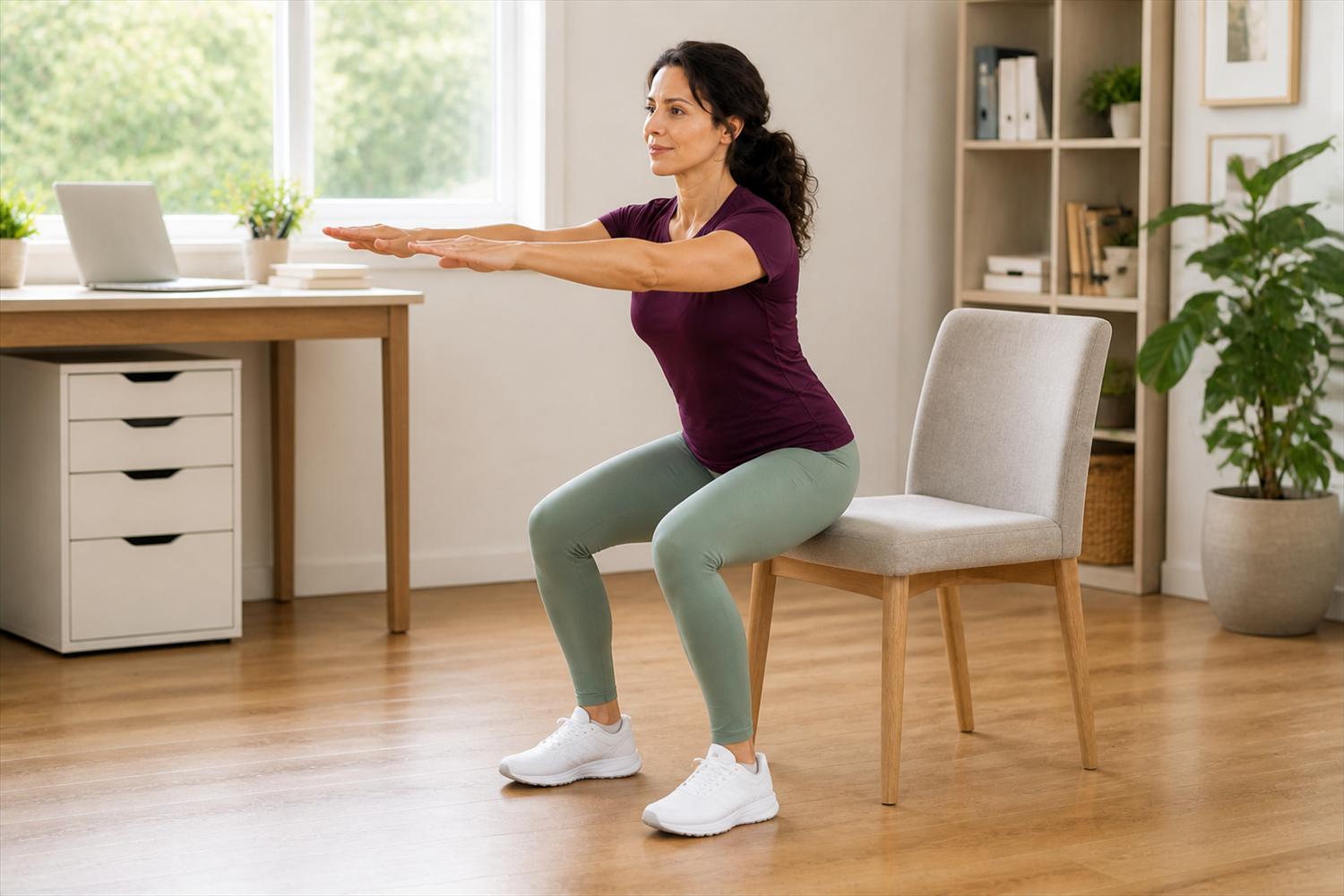
- 10 chair squats.
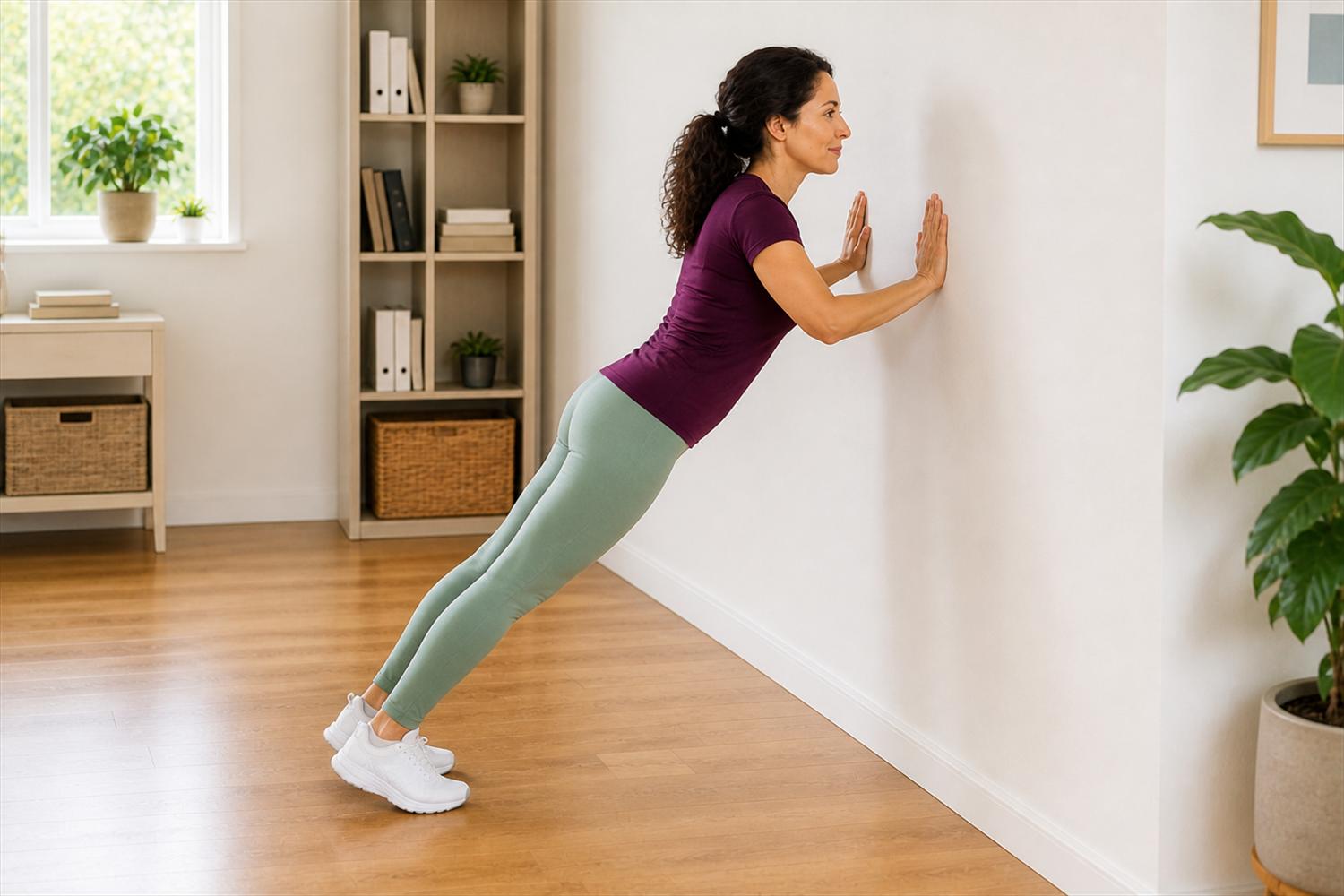
- 8 wall push ups.
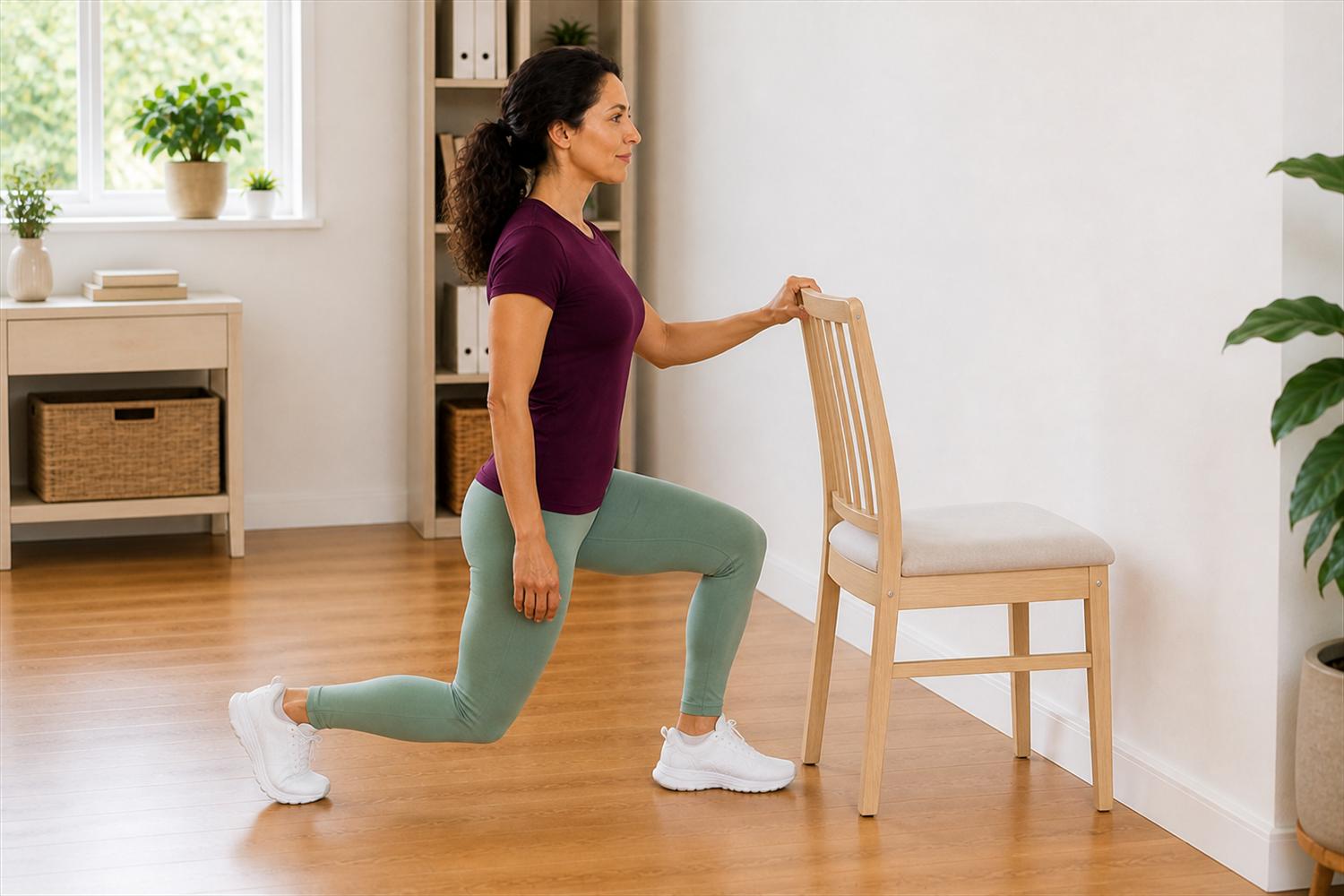
- 10 reverse lunges in total, 5 per side.
- Rest briefly.
- Repeat the circuit once.
- Use any time left over for slow walking and easy breathing.
Modifications
- Chair squats: use a higher chair, or reduce how far you lower yourself.
- Wall push ups: stand closer to the wall to make them easier.
- Reverse lunges: hold a stable chair with one hand for balance.
- If lunges do not feel right, replace them with supported step backs using a smaller range of motion.
A circuit like this doubles as a real break from screen work. If you already use intentional micro breaks to stop stress accumulating through the afternoon, this is simply a more physical version of the same idea.
Session 3: Afternoon stair snack
Stairs raise the effort quickly without needing any equipment, which makes them useful when you have 10 minutes and want the session to feel like something. Control matters more than speed here.
The session
- Walk easily for 1 minute.
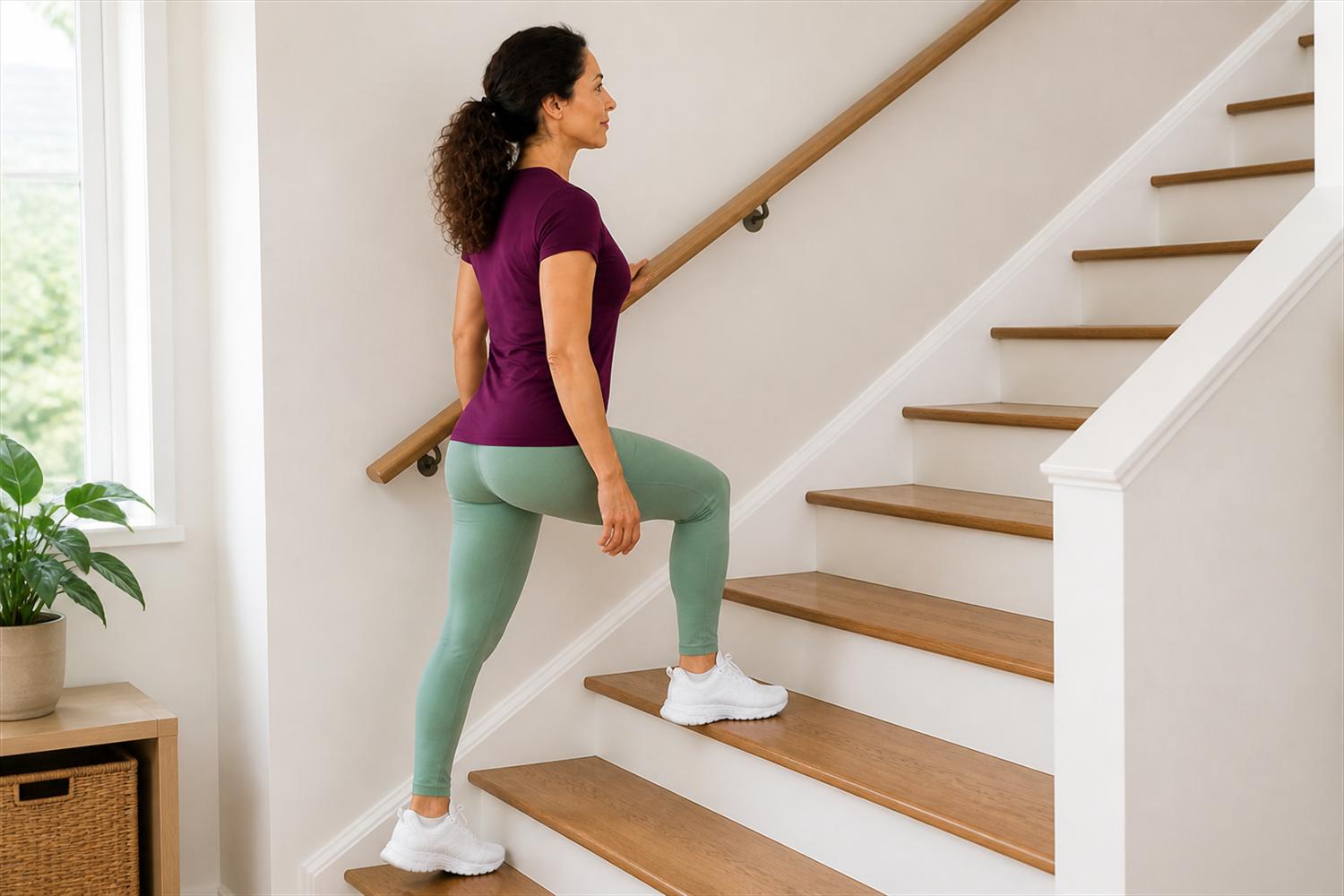
- Climb stairs at a controlled pace for 1 minute.
- Walk easily for 1 minute.
- Repeat that climbing and walking pattern four times in total.
- Finish with 1 minute of easy walking.
Doing it safely
- Keep a handrail within reach and use it whenever you want it.
- Place your whole foot on each step rather than rushing the edges.
- Walk back down at an easy pace. Descending is not the working part.
- No stairs, or balance concerns? Replace the climbing minute with one minute of faster flat walking, or a gentle incline if you have one nearby.
Session 4: Evening mobility reset
This one is the counterweight to a day spent sitting. It focuses on moving through comfortable ranges and controlling your position, rather than raising your heart rate.
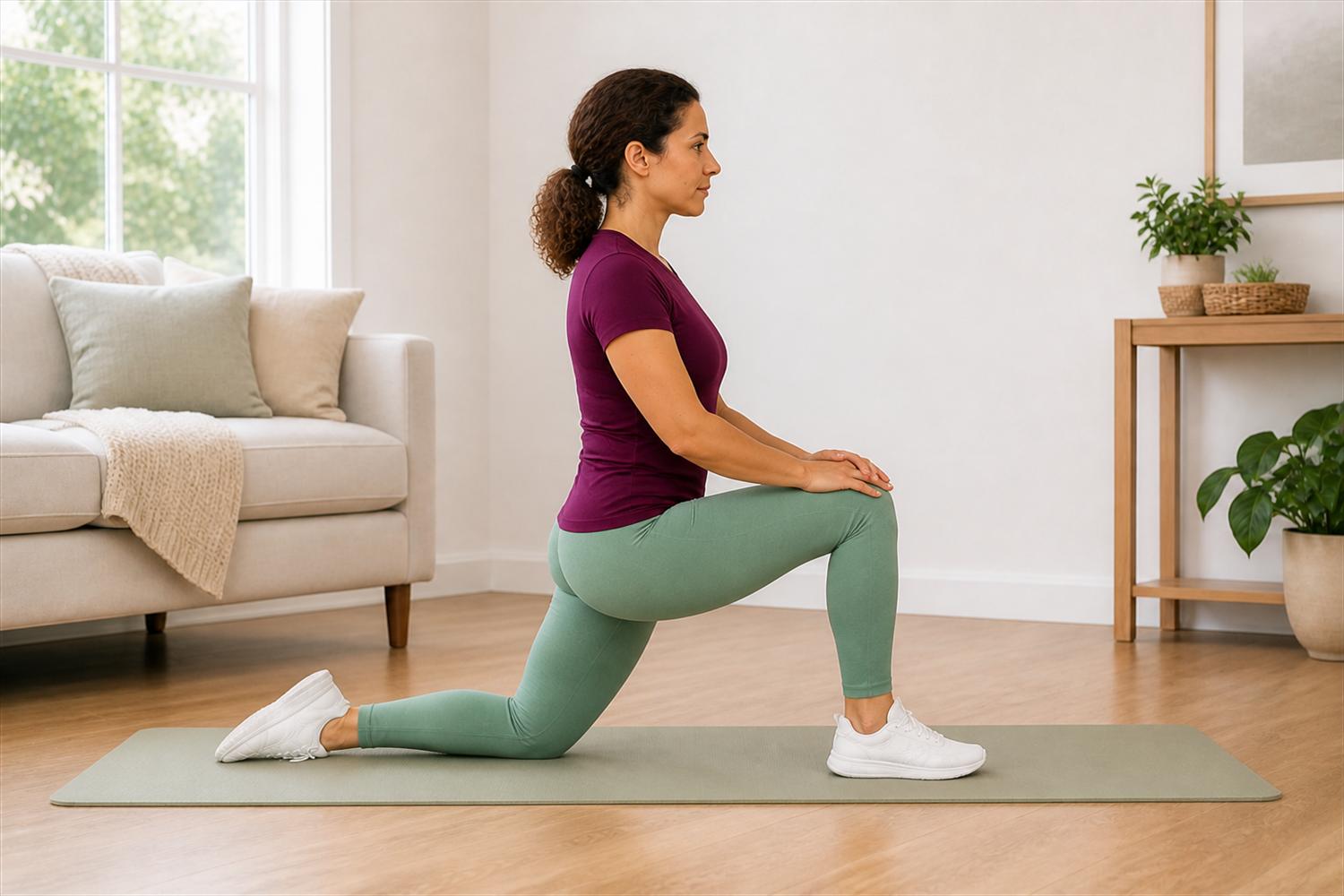
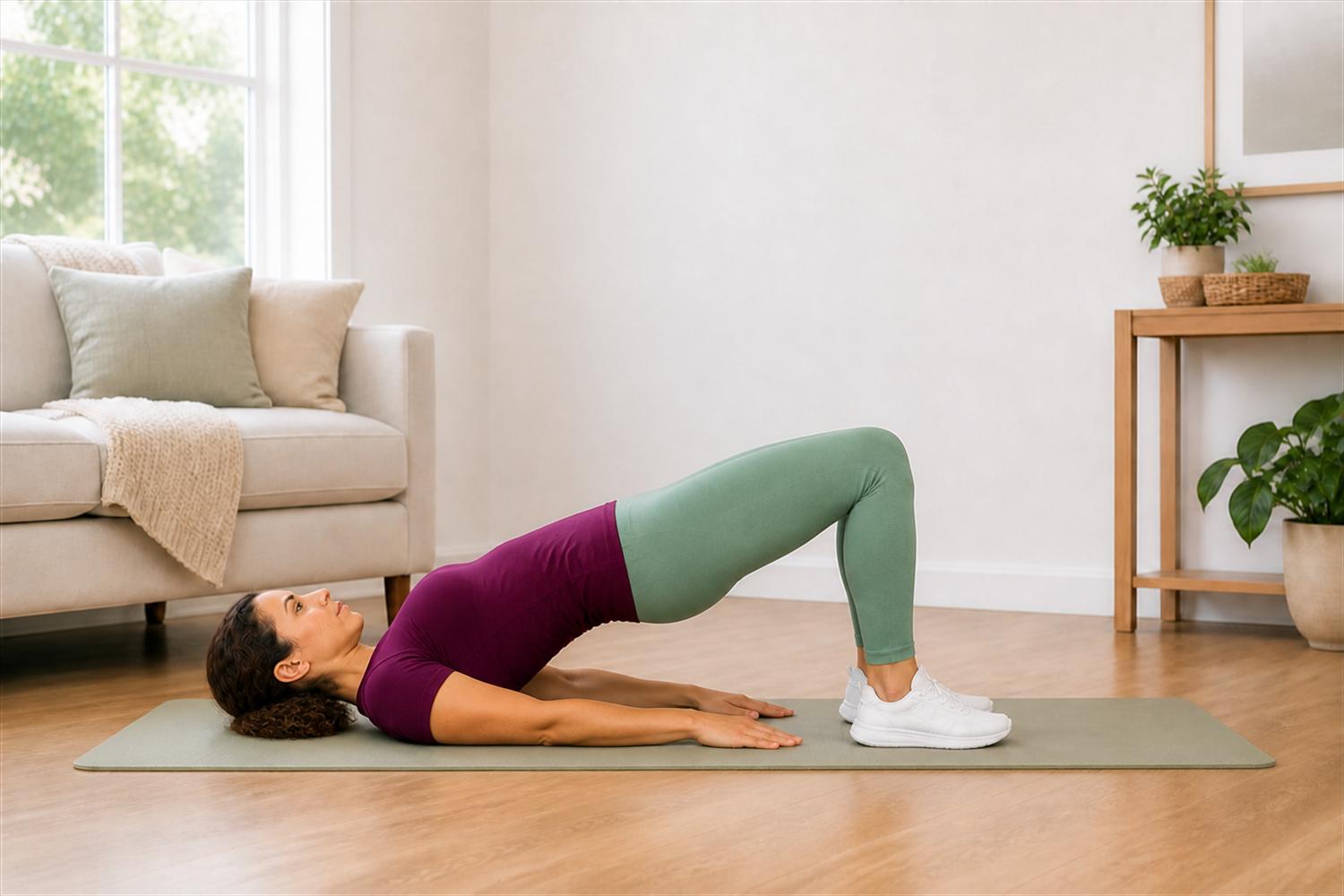
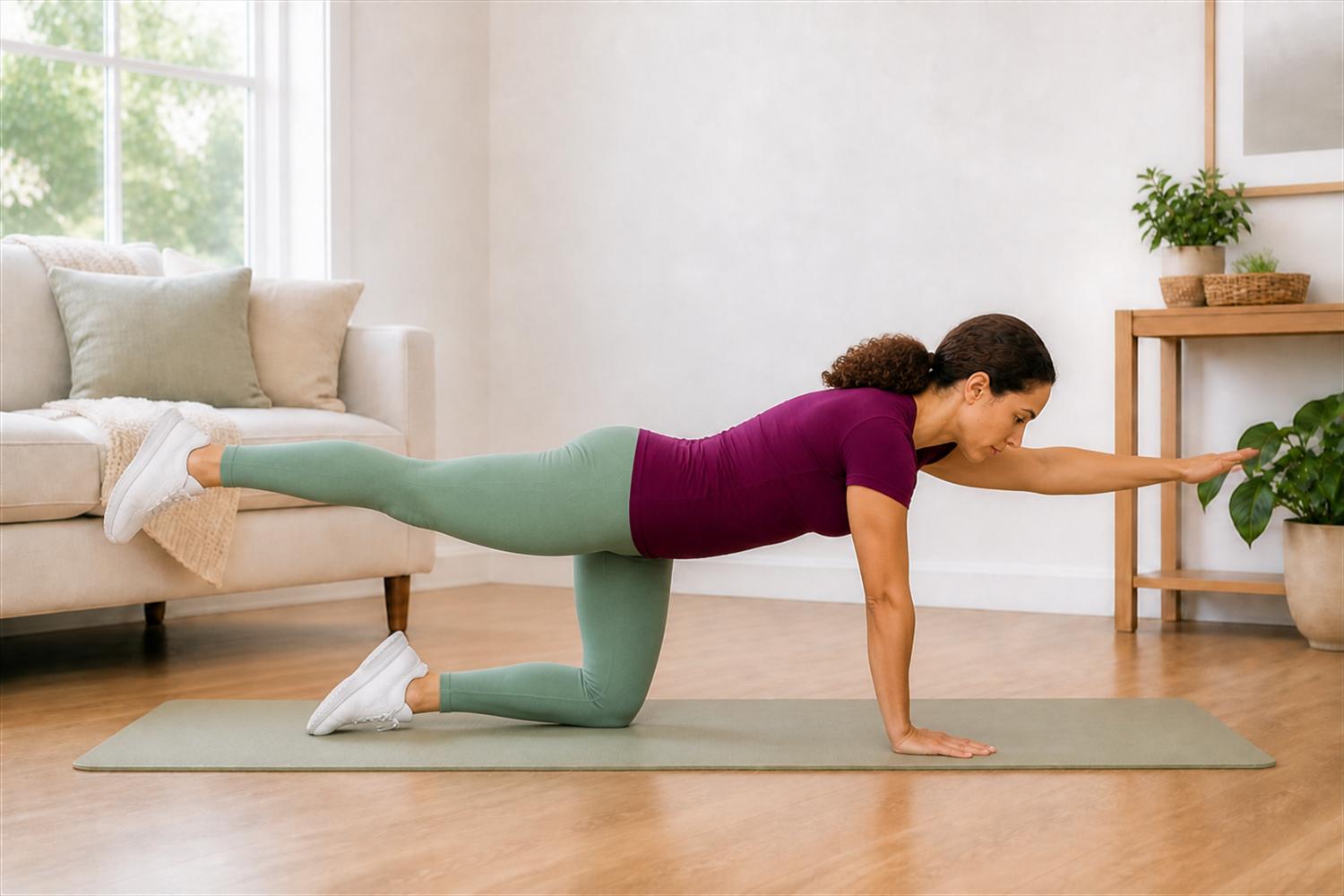
The session
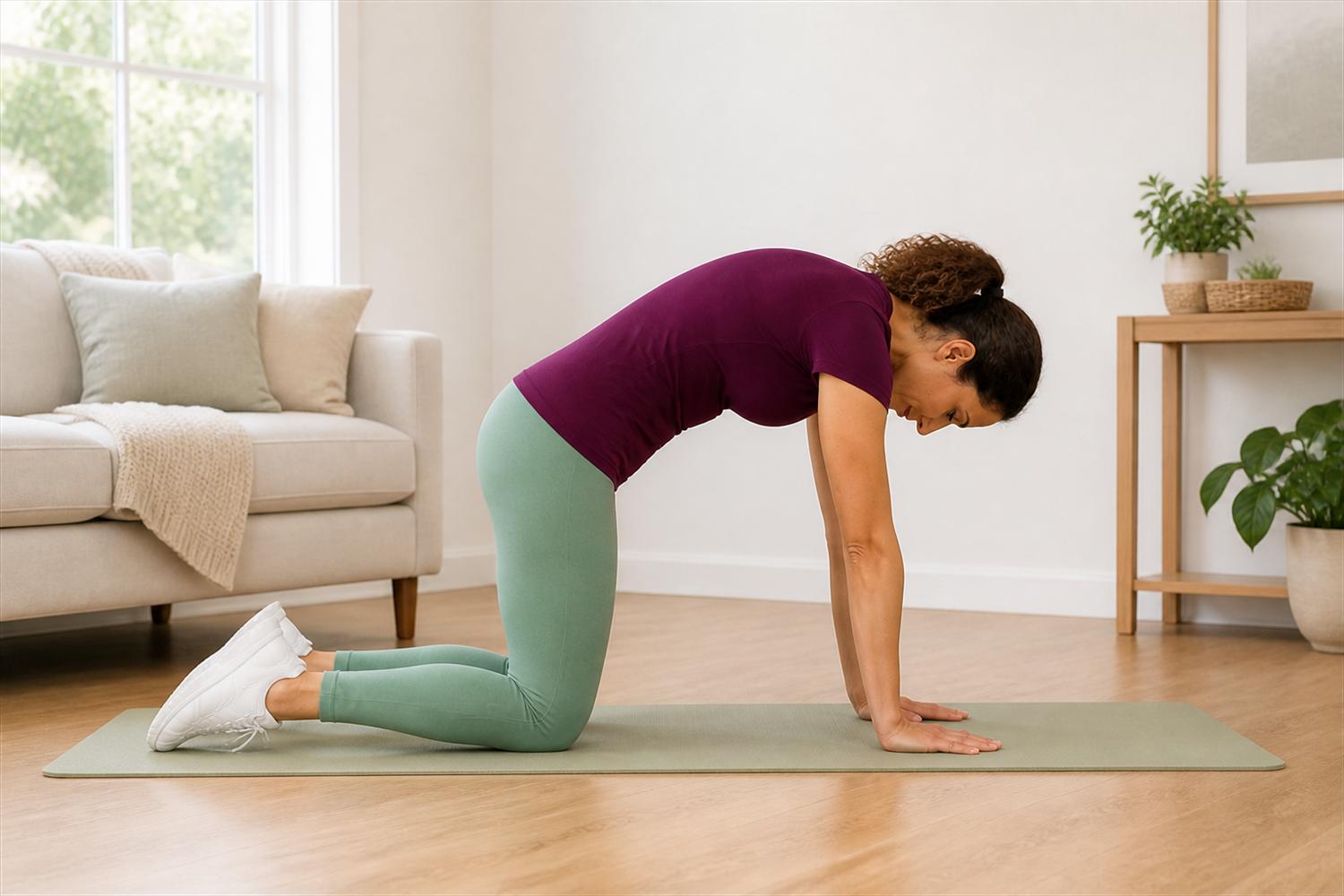
- Cat cow for 1 minute.
- Half kneeling hip flexor stretch, 1 minute per side.
- Glute bridges for about 3 minutes, resting whenever you need to.
- Bird dog for about 3 minutes, using slow controlled repetitions.
- Finish with 1 minute of relaxed breathing.
How to count it
This is mobility and control work. It is worth doing, and it should not be recorded as moderate cardio. Keep it in its own column when you look at your week.
An easy evening session also pairs naturally with a wind down. The Sleep Reset guide covers how to time movement in the evening so it settles you rather than wakes you up.
Building a weekly plan
The four sessions do different jobs, so it helps to see your week in columns rather than as one number. Total movement time, moderate aerobic time, strength work and mobility are four separate things.
| Approach | What it looks like | What it covers |
|---|---|---|
| Starter | One 10 minute session on most days | Builds the habit before it builds fitness |
| Building | Two different 10 minute sessions on most days | Usually one walking session plus one strength or mobility session |
| Aerobic goal example | Three moderate 10 minute sessions on five days | Adds up to 150 moderate minutes, if the effort is genuinely moderate |
| Strength requirement | The bodyweight circuit on at least two days | Covers the muscle strengthening side of the week |
| Mobility support | The evening reset as often as it helps | Additional movement, counted separately from moderate cardio |
The distinction that matters
Total movement time is everything you did. Moderate aerobic time is only the portion performed at a moderate effort, judged by the talk test. Strength work is the circuit. Mobility is the floor session. Adding all four together into a single number is where most people overestimate their week.
Seven day starter plan
The weekly plan shows how the sessions add up. This plan tells you what to do first: one session a day for a week. The point is not to complete it perfectly. It is to find out which of the four sessions survives contact with your actual schedule.
Days 1–4
- Day 1: Morning brisk walk
- Day 2: Evening mobility reset
- Day 3: Desk break strength
- Day 4: Morning brisk walk
Days 5–7
- Day 5: Afternoon walking and stair interval
- Day 6: Choose any two movement snacks
- Day 7: Repeat whichever session felt easiest to do
At the end of the week, keep what fits
If the morning walk happened five times and the stair session never did, that is useful information rather than a failure. Build the following month around the sessions that slotted into your life without negotiation.
Safety and modifications
Before you start
Choose movements and an intensity that suit your current ability. If you have health concerns, ongoing pain, balance limitations or medical restrictions, speak with a qualified professional before starting something new. This guide is general wellness education, not medical advice.
Sensible defaults
- Pick a pace you could sustain for a few minutes longer than the session asks.
- Use stable furniture only. A chair with wheels is not a chair.
- Wear supportive footwear, especially on stairs.
- Keep a handrail within reach when climbing.
- Reduce the range of motion whenever a movement feels unstable.
- Skip anything that causes pain rather than working around it.
Stop and seek advice if you notice
- Chest pain or pressure
- Severe shortness of breath
- Dizziness or feeling faint
- Unusual weakness
None of these are things to push through. Stop the session and get appropriate guidance.
FAQ
What are some examples of snack exercises?
The four sessions in this guide are complete examples: a 10 minute brisk walk, a desk break circuit of chair squats, wall push ups and reverse lunges, a stair interval and an evening mobility reset. Smaller examples work the same way, such as a few flights of stairs between calls, a set of chair squats while the kettle boils or a brisk walk around the block after lunch. What makes each one an exercise snack is that you choose it, give it a start and an end, and can repeat it.
How many exercise snacks should I do each day?
One is a reasonable starting point. Many people settle at two on most days, often one walking session and one strength or mobility session. Add a third only once the first two feel automatic.
Can short workouts replace the gym?
Not automatically. Exercise snacks are a scheduling method, not a complete training program. They do not cover heavier progressive strength work, longer endurance sessions or sport specific skills. They are a realistic option when a longer session is not going to happen.
Do I need exercise equipment?
No. All four sessions in this guide use a sturdy chair, a clear stretch of wall, a staircase or flat ground, and a mat or carpet for floor work. Supportive shoes are the one thing worth having.
Keep Going
-
-