
Before you start: the 2-minute baseline
Before adding anything new, take a quick snapshot of where you are right now. It makes real progress easier to notice and keeps you from changing ten things at once.

Answer quickly
- How does your morning feel? Rushed, foggy, okay, or calm?
- First thing you reach for: your phone, coffee, or nothing?
- How long until you feel alert? A few minutes, an hour, or never fully?
- Do you eat breakfast? Always, sometimes, or not usually?
The goal
The goal isn't a perfect morning. It's a morning that doesn't start the day already behind. Get through the first hour feeling mostly calm rather than reactive and scattered, and the rest of the day usually follows.
1. Light before your phone
Before you check anything, get light in your eyes. Step outside, open the curtains, or stand near a bright window for a few minutes. It's not about sunbathing. It's about sending a clear signal to your body clock that the day has started.

Why it works
Morning light helps anchor your circadian rhythm, the internal clock behind alertness, sleep timing, and hormones like cortisol and melatonin. Light early in the day helps that clock run on schedule, so you feel alert in the morning and sleepy at night.
It pairs directly with the wake-time anchor in the Sleep Reset guide. A consistent wake time plus morning light is the most reliable combination for a steady rhythm.
Practical notes
- A few minutes counts. You don't need to be outside for half an hour.
- If you wake before sunrise, a bright overhead light or a daylight lamp is a reasonable substitute.
- What to avoid: starting the day with a phone screen in a dim room. A small screen at close range isn't the same signal as daylight.
2. A 2-minute breathing reset
Before you check anything, take 2 minutes to slow your breathing. It's a small but reliable way to ease early-morning tension and avoid starting the day already in reactive mode.

The simple pattern
- Inhale slowly through your nose for 4 seconds.
- Exhale slowly through your mouth for 6 seconds.
- Repeat for about 10 cycles, roughly 2 minutes.
Do it in bed before you sit up, seated at the edge of the bed, or standing by the window after getting light. No app required.
Why before checking anything
Cortisol naturally rises in the first 30 to 60 minutes after waking; it's part of how your body wakes up. Checking your phone straight away layers notifications, news and messages on top of that. Two minutes of slow breathing first is a gentler start.
It's the same pattern as the 2-Minute Breathing Reset Before Meals, just used at a different point in the day.
3. Water before coffee
Drink a full glass of water before you brew or reach for caffeine. It takes 30 seconds and costs you nothing.

Why it helps
After a night without drinking anything, a glass of water is an easy way to start the day hydrated. Even mild dehydration can leave some people feeling less alert, and water first is a simple habit to attach to the coffee you were going to make anyway.
Making it stick
- Leave a glass on your nightstand the night before so it's already there when you wake up.
- You don't need to wait before coffee. Drink water first, then brew. The order is the habit.
- Room temperature or cold, either works. Don't overthink this one.
4. Move for 5–10 minutes
Any movement counts: a short walk, light stretching, a few minutes of mobility work, or some bodyweight movement. The goal isn't a workout. It's a body-awake signal.

Why it works
Moving in the morning raises your body temperature and blood flow and helps you feel more awake. Even a 5-minute walk feels different from sitting still.
If you want a complete menu of short options, the Exercise Snacking guide includes walking, strength, stairs and mobility sessions you can finish in 10 minutes.
What counts
- If you have a dog, the morning walk already covers this. No need to add more.
- If you exercise later in the day, a brief morning movement cue is still worth keeping. The goal is the signal, not the training.
- Stretching in place or a few minutes of bodyweight movement counts when you can't get outside.
5. A protein-first breakfast before hunger spikes
If you eat breakfast, lead with protein: eggs, Greek yogurt, cottage cheese, or a protein smoothie. Many people feel steadier when they eat before hunger turns urgent rather than in response to it, but there's no single right time. Find the window that suits your morning.

Why protein first
Protein digests slowly and can help keep your energy and mid-morning cravings steadier. A carb-only breakfast like toast, cereal or juice tends to give a quick lift followed by a dip.
The Eat More, Stay Fuller guide covers high-satiety foods in more detail. Several of them make strong breakfast anchors.
If you skip breakfast
Breakfast isn't mandatory. If you're not hungry in the morning, you don't need to force a meal. If you'd like something small, try a boiled egg, a spoonful of nut butter, or a few bites of yogurt. And if you prefer to eat later, make your first meal the one that leads with protein.
6. Protect the first 10 minutes of focused time
Before you check email, social media or messages, do one small chosen task first. It doesn't need to be important. Write a single sentence, review your calendar, make a list, or clear one small thing.
The point is that the first intentional action of the day is yours.

Why the first action matters
Reactive mornings compound. When the first thing you do is check what other people want from you, the rest of the morning tends to run on that same channel. One small proactive action shifts the tone of the morning.
This isn't "no phone ever"
It's 10 minutes of your own agenda before the world's agenda. Check everything after, just not first. Even 5 minutes of something self-directed beats going straight to reactive tasks.
7. A calm focus cue before deep work
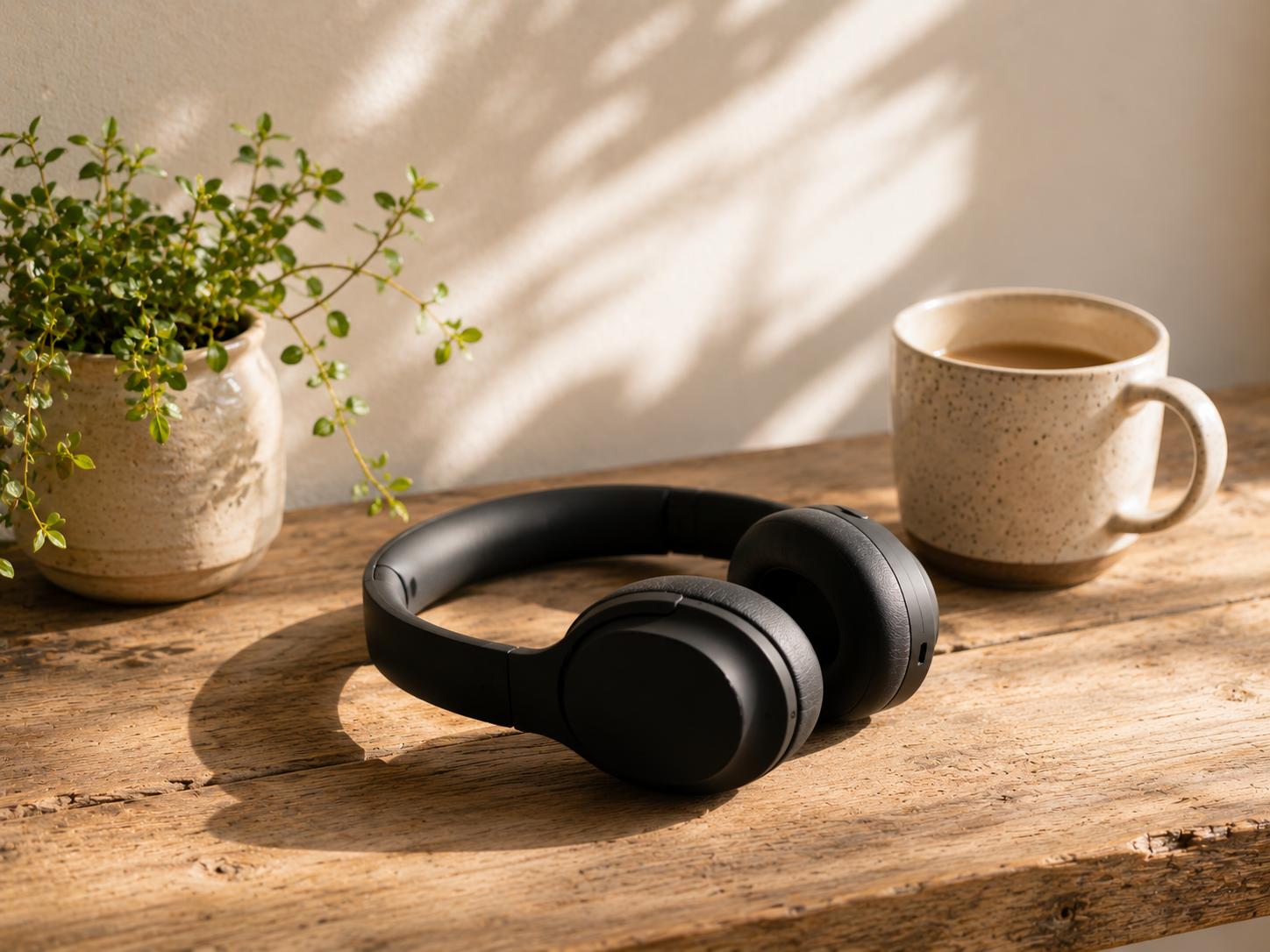
Before your most demanding work, use a short, consistent signal that tells your brain it's time to focus. The cue itself matters less than the consistency: repeated often enough, the ritual becomes the switch.
What a focus cue looks like
- A short audio session: music, ambient sound, or a guided track
- A brief journaling moment: two or three sentences before the day's work begins
- A specific playlist that only plays during deep work
- One minute of intentional silence before opening anything
A few minutes is plenty. The repetition matters more than the length.
Why it's the last habit
The first six habits prepare the body. This one prepares the mind. By the time you get here, you've had light, breath, water, movement, food, and one self-directed task. The focus cue is the bridge from the morning into the work.
Some people use a short guided audio routine for this, something consistent enough that it becomes the signal itself. If that sounds useful, The Genius Wave is one option we've reviewed.
Pick your morning stack
The biggest variable in a morning routine isn't willingness; it's available time. Some mornings you have 5 minutes. Some mornings you have 30. Here are three versions depending on what your day gives you.

The 5-minute morning
For chaotic days, travel, or when everything goes sideways.
- Open the curtains or step outside for 60 seconds.
- One slow exhale before reaching for your phone.
- Water before coffee.
This isn't failure. It's the minimum that keeps the habit alive when your morning falls apart.
The 20-minute morningStart here
The reliable version for most days.
- Light in the first 10 minutes after waking.
- A 2-minute breathing reset.
- Water before coffee.
- 5 minutes of movement.
- Something with protein, if you eat breakfast.
Anchor this version. Do it five days a week and most mornings will already feel better.
The full stack
For weekends or when your schedule gives you room.
- Everything in the 20-minute morning.
- Protect the first 10 minutes before reactive tasks.
- Use a calm focus cue before deep work.
The goal isn't to run the full stack every day. It's to have a default for each kind of morning.
Start with the 20-minute version and give it a few weeks. New habits usually take longer to feel automatic than people expect, and missing a day doesn't undo your progress. Once it feels routine, decide whether to add the full-stack habits on some mornings. Consistency on the middle version beats occasional perfection on all seven.
FAQ
Do I need to wake up at 5am for a morning routine to work?
No. These habits don't depend on when you wake up. The goal isn't an earlier alarm; it's a more intentional first 30 to 60 minutes, whatever time that happens to be.
What if I'm not a morning person?
Feeling slow in the morning is often about sleep timing and light rather than a fixed personality trait. A consistent wake time plus morning light can gradually change how the first hour feels, though how quickly varies from person to person. Start with one habit, not all seven.
What if my mornings are unpredictable because of kids or shift work?
Pick the habits that survive a chaotic morning. Water before coffee and one slow breath before checking your phone take under a minute combined. Two things done consistently beat seven things done occasionally.
How long before a morning routine feels natural?
Longer than most advice suggests, and it varies. In one well-known study of new daily habits, the time it took for a habit to feel automatic ranged from about 18 days to more than 8 months, with around two months being typical, and missing an occasional day didn't undo the progress. Mornings often feel less rushed well before the routine feels automatic.
Is drinking coffee first thing in the morning bad?
Not for most people. Despite popular advice, there's little good evidence that waiting 60 to 90 minutes after waking prevents an afternoon crash. How much caffeine you have, and how late your last cup is, matter more. Drinking a glass of water first is an easy habit to pair with coffee, not a rule.
Keep Going
-

-