Before you start: the 2-minute baseline
Grab a note on your phone and answer quickly. A baseline makes real improvement easier to notice and stops you changing ten things at once.

Answer quickly
- Bathroom pattern: typically daily, every other day, or less often?
- Bloating most days: low, medium, or high?
- Fiber foods today: fruit, vegetables, beans, whole grains, nuts, seeds?
- Movement: did you walk at all after meals?
- Stress level: low, medium, or high?
The goal
The goal is not a "perfect" gut. It's a gut that bounces back after travel, stress or off days. Signs your habits need support include swinging between constipation and loose stools, or feeling heavy after normal portions.
1. Anchor your day with fiber at breakfast
If you only fix one thing, make it this: add fiber early. Fiber supports regularity and feeds beneficial gut microbes. Common guidance for adults is roughly 25 to 38 grams a day, depending on age and sex, and most people eat well below that, so close the gap gradually.

Two easy upgrades
Choose one of these to start:
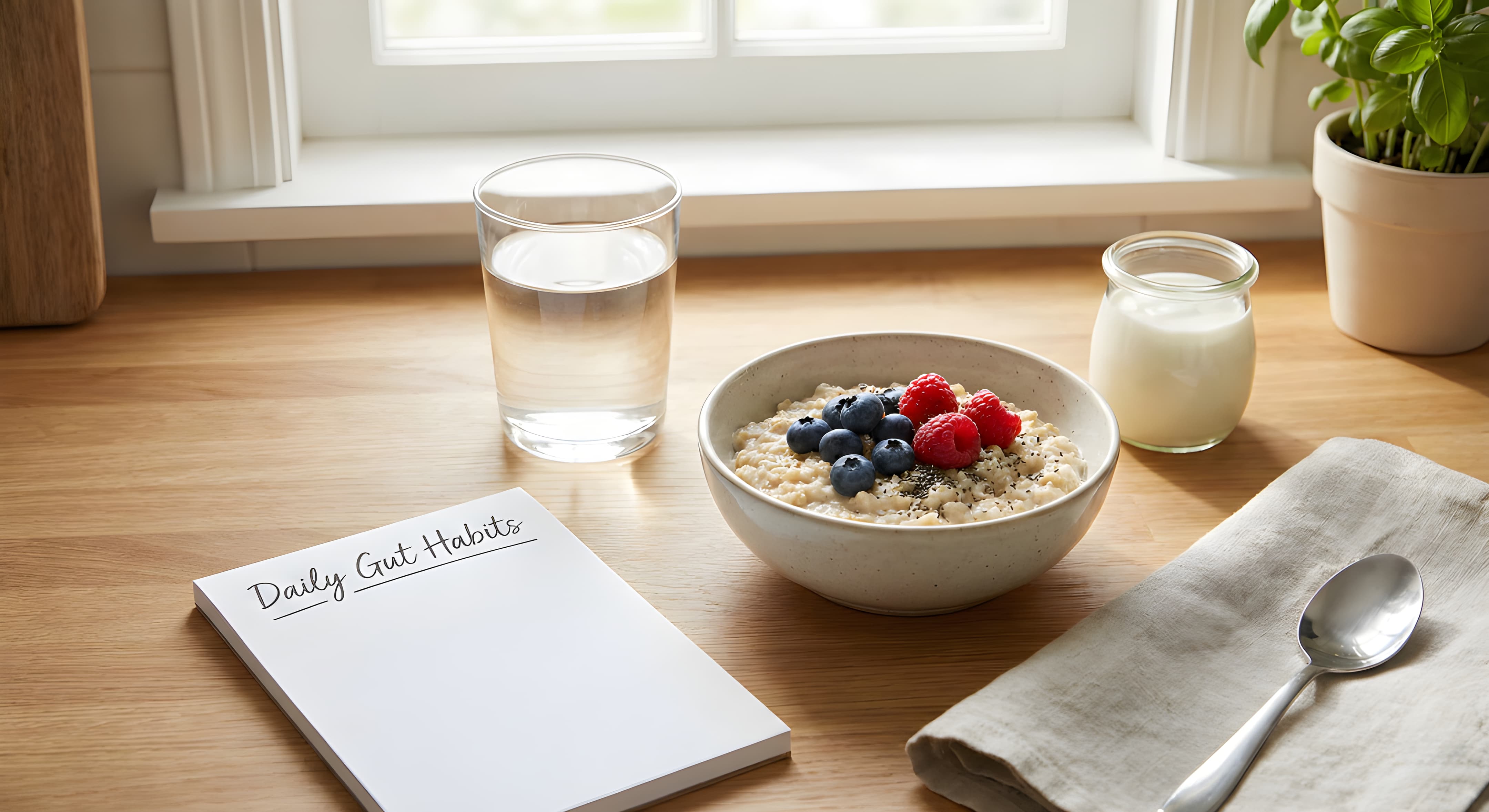
- Oatmeal with chia or ground flax, plus berries.
- Greek yogurt or kefir with berries, chia and a handful of oats.
The go-slow rule
This applies to every fiber habit in this guide. Add one fiber-rich food at a time, give your gut several days to adjust before adding the next, and drink more water the same week. If raw fruit or vegetables bloat you, try them cooked (stewed apples, roasted vegetables) first.
2. Add one prebiotic food daily
Prebiotics are fiber-rich foods that your gut microbes ferment. You don't need a supplement to start. As microbes ferment these fibers, they produce compounds that help nourish the lining of the gut.

Pick one a day
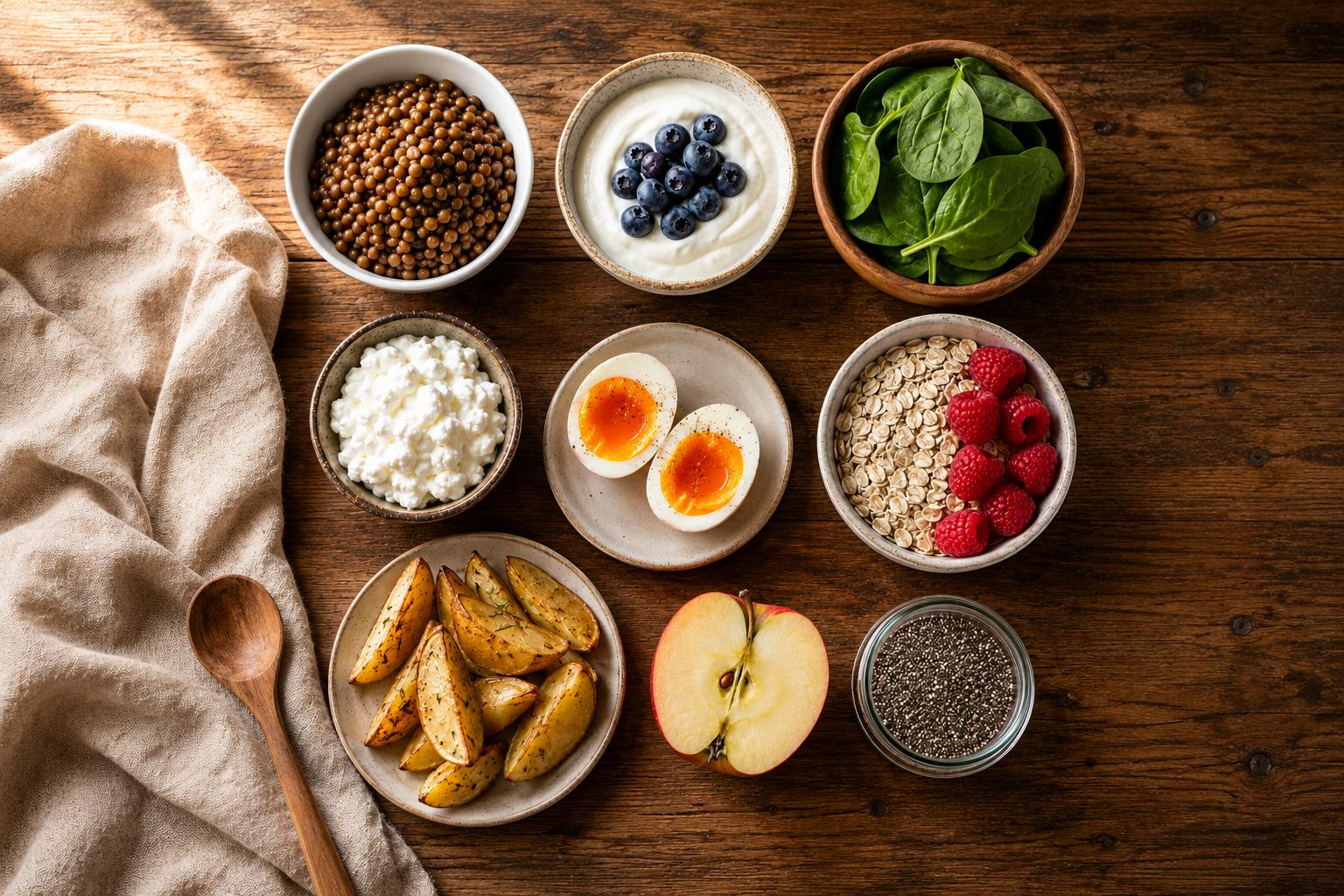
- Beans or lentils (even 2 or 3 spoonfuls counts)
- Oats
- Apples or pears
- Onions or garlic (cooked is fine)
- A slightly green banana
- Asparagus
- Barley, or cooked and cooled potatoes or rice (resistant starch)
If you're sensitive, follow the go-slow rule: small portions, cooked options first.
3. Eat fermented foods 3–5 times per week
Fermented foods with live cultures can support a healthier gut environment for many people.

Easy options
- Yogurt with live cultures
- Kefir
- Sauerkraut or kimchi (a small portion)
- Miso or tempeh
How to start without drama
Start with 1 to 2 tablespoons of fermented vegetables or half a cup of yogurt, and build up over a week or two. Choose milder, lower-spice options if you're sensitive.
4. Reduce ultra-processed foods most days
Cutting back on heavily processed snacks and drinks is a practical way to make room for the fiber-rich foods above, and many people find their digestion and energy feel steadier for it. A simple target: aim for most of your meals to look like ingredients, not products.

Two swaps to try this week
- Replace one packaged snack with nuts and a piece of fruit.
- Replace one sugary drink with water or unsweetened tea.
If you only change one thing this week, change what you snack on.
5. Hydration with a routine
Fluids help keep stool soft, which matters most when you're eating more fiber. Add fiber without adding fluids and constipation can get worse, so tie your water to times of day rather than relying on memory.

Try this routine for 7 days
- On waking: a glass of water within 30 minutes.
- Mid-morning: one more glass.
- Mid-afternoon: another glass.
- Dinner: water with the meal.
Needs vary with your size, activity and the weather, so use this as a starting routine rather than a target, and drink more when you're adding fiber.
6. Take a 10-minute walk after one meal
Gentle movement after eating supports digestion and can ease that heavy, too-full feeling.

Start tiny
Pick one meal and walk for 10 minutes within 30 minutes of eating.
- If you already walk, add a second 10-minute walk after another meal.
- If the weather is bad, walk indoors, take the stairs slowly, or do 10 minutes of gentle mobility.
7. Slow your eating speed
Eating fast can mean more swallowed air, bloating, reflux and discomfort. Slowing down supports your body's rest-and-digest state, and for many people it is one of the quickest ways to feel less bloated.

Try this at one meal today
- Take three slow breaths before the first bite.
- Chew until food is soft before swallowing.
- Put your fork down a few times during the meal.
8. Build a steady meal rhythm
Your gut likes predictability. Irregular eating can make digestion and hunger signals feel chaotic.
Keep it regular
Eat at roughly the same times most days, and avoid long gaps followed by very large meals.
Keep dinner lighter
Keep dinner portions reasonable, and earlier when you can. If your schedule is unpredictable, anchor one consistent meal a day (breakfast is often easiest).
9. Add polyphenols and plant variety
Polyphenols are plant compounds that appear to interact with the gut microbiome in helpful ways, and a wider range of plants gives your microbes more to work with. Aim for two or three different plant foods per meal when you can.

Easy daily adds
- Berries
- Green tea
- Extra virgin olive oil
- Herbs and spices
- Cocoa, in small amounts
10. Stress downshift for 2 minutes
Stress can change how quickly food moves through your gut and how sensitive it feels. A small daily downshift, ideally before a meal, helps your gut stay steadier.

Do this once a day
- Inhale through your nose for 4 seconds.
- Exhale slowly for 6 seconds.
- Repeat for 2 minutes.
Even easier version
Simply breathe slowly and make each exhale longer than the inhale.
Want the step-by-step version with a 7-day plan? Read the 2-minute breathing reset before meals guide.
A simple 7-day starter plan
Use this if you want structure without overwhelm. One new habit a day, and each one stays as you add the next, so by the end of the week you have a routine rather than a temporary challenge.

Days 1–3
Build the base
- Day 1: Fiber breakfast plus morning water.
- Day 2: Add a 10-minute walk after one meal.
- Day 3: Add one prebiotic food.
Days 4–7
Layer in the rest
- Day 4: Add one fermented food serving.
- Day 5: Swap one ultra-processed snack.
- Day 6: Slow down at one meal.
- Day 7: Do the 2-minute stress downshift.
After the week, keep the three habits that felt easiest for a month before adding more.
Health note: This is general wellness guidance, not medical advice. If you have ongoing abdominal pain, blood in your stool, unexplained weight loss, or a lasting change in your bowel habits, talk to a clinician rather than adjusting habits on your own.
FAQ
How long does it take to improve gut health?
It varies. Some changes, like slowing down at meals or cutting back on ultra-processed snacks, can feel different within days. Changes that depend on fiber, fermented foods and routine usually need a few weeks of consistency before you can judge them. Change one or two things at a time so you can tell what is helping.
Why do I get bloated when I eat healthy?
Often it's a speed and volume issue. If you suddenly add a lot of beans, raw vegetables and fiber without building up slowly, bloating can spike. Reduce the jump, cook vegetables more, drink more fluids, and keep walking after meals.
Are fermented foods better than probiotics?
For many people, fermented foods are a simpler first step because they build a food routine. Probiotic supplements help some people and do nothing for others. If you try one later, test one product at a time for 2 to 4 weeks.
Do I need to avoid gluten or dairy for gut health?
Not unless you have a confirmed intolerance or a food clearly triggers symptoms. Many people tolerate yogurt or kefir well. If you suspect a sensitivity, test one change at a time for 2 to 3 weeks.
What if I have reflux or heartburn too?
Try smaller dinner portions, eat more slowly, avoid lying down right after meals, and keep evening food less greasy or spicy. If symptoms persist, talk to a clinician.
Is coffee bad for gut health?
Not automatically. Some people tolerate coffee well, and it can get things moving. If it worsens diarrhea, reflux or anxiety, reduce the amount or have it earlier in the day.
Keep Going
-

-